Posted on 1 Comment

A Focus on Literacy

Image result for literacyIn recent months, I have been focusing more and more on speaking engagements as well as the development of products with an explicit focus on assessment and intervention of literacy in speech-language pathology. Today I’d like to introduce 4 of my recently developed products pertinent to assessment and treatment of literacy in speech-language pathology.

First up is the Comprehensive Assessment and Treatment of Literacy Disorders in Speech-Language Pathology

which describes how speech-language pathologists can effectively assess and treat children with literacy disorders, (reading, spelling, and writing deficits including dyslexia) from preschool through adolescence.  It explains the impact of language disorders on literacy development, lists formal and informal assessment instruments and procedures, as well as describes the importance of assessing higher order language skills for literacy purposes. It reviews components of effective reading instruction including phonological awareness, orthographic knowledge, vocabulary awareness,  morphological awareness, as well as reading fluency and comprehension. Finally, it provides recommendations on how components of effective reading instruction can be cohesively integrated into speech-language therapy sessions in order to improve literacy abilities of children with language disorders and learning disabilities.

from wordless books to readingNext up is a product entitled From Wordless Picture Books to Reading Instruction: Effective Strategies for SLPs Working with Intellectually Impaired StudentsThis product discusses how to address the development of critical thinking skills through a variety of picture books utilizing the framework outlined in Bloom’s Taxonomy: Cognitive Domain which encompasses the categories of knowledge, comprehension, application, analysis, synthesis, and evaluation in children with intellectual impairments. It shares a number of similarities with the above product as it also reviews components of effective reading instruction for children with language and intellectual disabilities as well as provides recommendations on how to integrate reading instruction effectively into speech-language therapy sessions.

Improving critical thinking via picture booksThe product Improving Critical Thinking Skills via Picture Books in Children with Language Disorders is also available for sale on its own with a focus on only teaching critical thinking skills via the use of picture books.

Best Practices in Bilingual LiteracyFinally,   my last product Best Practices in Bilingual Literacy Assessments and Interventions focuses on how bilingual speech-language pathologists (SLPs) can effectively assess and intervene with simultaneously bilingual and multicultural children (with stronger academic English language skills) diagnosed with linguistically-based literacy impairments. Topics include components of effective literacy assessments for simultaneously bilingual children (with stronger English abilities), best instructional literacy practices, translanguaging support strategies, critical questions relevant to the provision of effective interventions, as well as use of accommodations, modifications and compensatory strategies for improvement of bilingual students’ performance in social and academic settings.

You can find these and other products in my online store (HERE).

Helpful Smart Speech Therapy Resources:

Posted on Leave a comment

What do Narratives and Pediatric Psychiatric Impairments Have in Common?

High comorbidity between language and psychiatric disorders has been well documented (Beitchman, Cohen, Konstantaras, & Tannock, 1996; Cohen, Barwick, Horodezky, Vallence, & Im, 1998; Toppelberg & Shapiro, 2000). However, a lesser known fact is that there’s also a significant under-diagnosis of language impairments in children with psychiatric disorders.  Continue reading What do Narratives and Pediatric Psychiatric Impairments Have in Common?

Posted on 17 Comments

Review of the Test of Integrated Language and Literacy (TILLS)

The Test of Integrated Language & Literacy Skills (TILLS) is an assessment of oral and written language abilities in students 6–18 years of age. Published in the Fall 2015, it is  unique in the way that it is aimed to thoroughly assess skills  such as reading fluency, reading comprehension, phonological awareness,  spelling, as well as writing  in school age children.   As I have been using this test since the time it was published,  I wanted to take an opportunity today to share just a few of my impressions of this assessment.
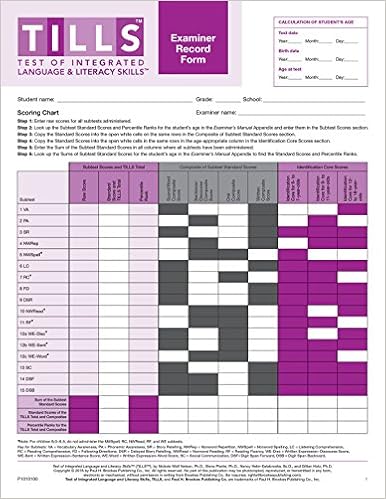
               

First, a little background on why I chose to purchase this test  so shortly after I had purchased the Clinical Evaluation of Language Fundamentals – 5 (CELF-5).   Soon after I started using the CELF-5  I noticed that  it tended to considerably overinflate my students’ scores  on a variety of its subtests.  In fact,  I noticed that unless a student had a fairly severe degree of impairment,  the majority of his/her scores  came out either low/slightly below average (click for more info on why this was happening HERE, HEREor HERE). Consequently,  I was excited to hear regarding TILLS development, almost simultaneously through ASHA as well as SPELL-Links ListServe.   I was particularly happy  because I knew some of this test’s developers (e.g., Dr. Elena Plante, Dr. Nickola Nelson) have published solid research in the areas of  psychometrics and literacy respectively.

According to the TILLS developers it has been standardized for 3 purposes:

  • to identify language and literacy disorders
  • to document patterns of relative strengths and weaknesses
  • to track changes in language and literacy skills over time

The testing subtests can be administered in isolation (with the exception of a few) or in its entirety.  The administration of all the 15 subtests may take approximately an hour and a half, while the administration of the core subtests typically takes ~45 mins).

Please note that there are 5 subtests that should not be administered to students 6;0-6;5 years of age because many typically developing students are still mastering the required skills.

  • Subtest 5 – Nonword Spelling
  • Subtest 7 – Reading Comprehension
  • Subtest 10 – Nonword Reading
  • Subtest 11 – Reading Fluency
  • Subtest 12 – Written Expression

However,  if needed, there are several tests of early reading and writing abilities which are available for assessment of children under 6:5 years of age with suspected literacy deficits (e.g., TERA-3: Test of Early Reading Ability–Third Edition; Test of Early Written Language, Third Edition-TEWL-3, etc.).

Let’s move on to take a deeper look at its subtests. Please note that for the purposes of this review all images came directly from and are the property of Brookes Publishing Co (clicking on each of the below images will take you directly to their source).
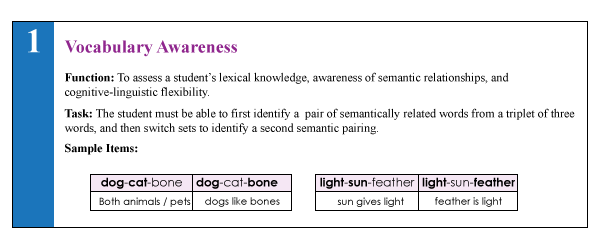
TILLS-subtest-1-vocabulary-awareness1. Vocabulary Awareness (VA) (description above) requires students to display considerable linguistic and cognitive flexibility in order to earn an average score.    It works great in teasing out students with weak vocabulary knowledge and use,   as well as students who are unable to  quickly and effectively analyze  words  for deeper meaning and come up with effective definitions of all possible word associations. Be mindful of the fact that  even though the words are presented to the students in written format in the stimulus book, the examiner is still expected to read  all the words to the students. Consequently,  students with good vocabulary knowledge  and strong oral language abilities  can still pass this subtest  despite the presence of significant reading weaknesses. Recommendation:  I suggest informally  checking the student’s  word reading abilities  by asking them to read of all the words, before reading all the word choices to them.   This way  you can informally document any word misreadings  made by the student even in the presence of an average subtest score.
TIILLS-subtest-2-phonemic-awareness

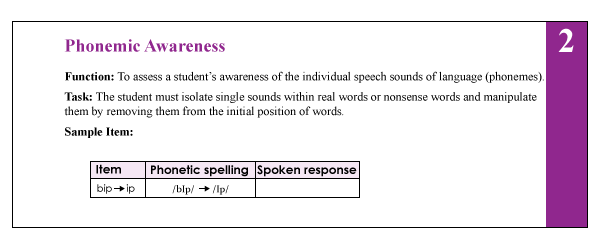
2. The Phonemic Awareness (PA) subtest (description above) requires students to  isolate and delete initial sounds in words of increasing complexity.  While this subtest does not require sound isolation and deletion in various word positions, similar to tests such as the CTOPP-2: Comprehensive Test of Phonological Processing–Second Edition  or the The Phonological Awareness Test 2 (PAT 2)  it is still a highly useful and reliable measure of  phonemic awareness (as one of many precursors to reading fluency success).  This is especially because after the initial directions are given, the student is expected to remember to isolate the initial sounds in words without any prompting from the examiner.  Thus,  this task also  indirectly tests the students’ executive function abilities in addition to their phonemic awareness skills.
TILLS-subtest-3-story-retelling

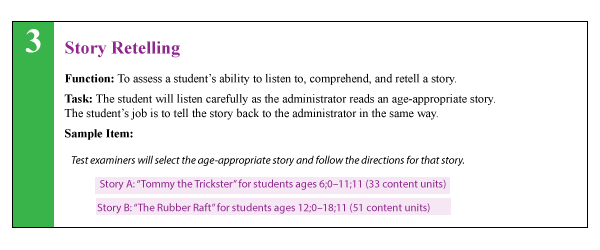
3. The Story Retelling (SR) subtest (description above) requires students to do just that retell a story. Be mindful of the fact that the presented stories have reduced complexity. Thus, unless the students possess  significant retelling deficits, the above subtest  may not capture their true retelling abilities. Recommendation:  Consider supplementing this subtest  with informal narrative measures. For younger children (kindergarten and first grade) I recommend using wordless picture books to perform a dynamic assessment of their retelling abilities following a clinician’s narrative model (e.g., HERE).  For early elementary aged children (grades 2 and up), I recommend using picture books, which are first read to and then retold by the students with the benefit of pictorial but not written support. Finally, for upper elementary aged children (grades 4 and up), it may be helpful for the students to retell a book or a movie seen recently (or liked significantly) by them without the benefit of visual support all together (e.g., HERE).

TILLS-subtest-4-nonword-repetition

4. The Nonword Repetition (NR) subtest (description above) requires students to repeat nonsense words of increasing length and complexity. Weaknesses in the area of nonword repetition have consistently been associated with language impairments and learning disabilities due to the task’s heavy reliance on phonological segmentation as well as phonological and lexical knowledge (Leclercq, Maillart, Majerus, 2013). Thus, both monolingual and simultaneously bilingual children with language and literacy impairments will be observed to present with patterns of segment substitutions (subtle substitutions of sounds and syllables in presented nonsense words) as well as segment deletions of nonword sequences more than 2-3 or 3-4 syllables in length (depending on the child’s age).
TILLS-subtest-5-nonword-spelling

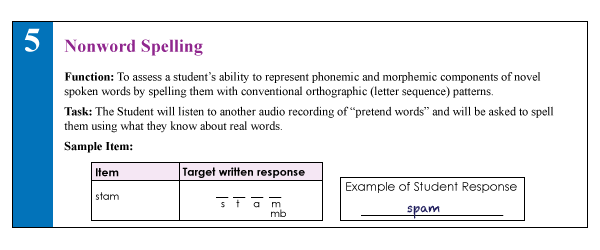
5. The Nonword Spelling (NS) subtest (description above) requires the students to spell nonwords from the Nonword Repetition (NR) subtest. Consequently, the Nonword Repetition (NR) subtest needs to be administered prior to the administration of this subtest in the same assessment session.  In contrast to the real-word spelling tasks,  students cannot memorize the spelling  of the presented words,  which are still bound by  orthographic and phonotactic constraints of the English language.   While this is a highly useful subtest,  is important to note that simultaneously bilingual children may present with decreased scores due to vowel errors.   Consequently,  it is important to analyze subtest results in order to determine whether dialectal differences rather than a presence of an actual disorder is responsible for the error patterns.
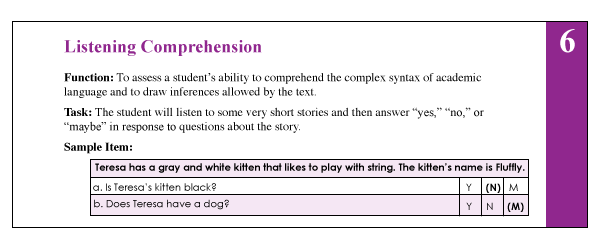
TILLS-subtest-6-listening-comprehension

6. The  Listening Comprehension (LC) subtest (description above) requires the students to listen to short stories  and then definitively answer story questions via available answer choices, which include: “Yes”, “No’, and “Maybe”. This subtest also indirectly measures the students’ metalinguistic awareness skills as they are needed to detect when the text does not provide sufficient information to answer a particular question definitively (e.g., “Maybe” response may be called for).  Be mindful of the fact that because the students are not expected to provide sentential responses  to questions it may be important to supplement subtest administration with another listening comprehension assessment. Tests such as the Listening Comprehension Test-2 (LCT-2), the Listening Comprehension Test-Adolescent (LCT-A),  or the Executive Function Test-Elementary (EFT-E)  may be useful  if  language processing and listening comprehension deficits are suspected or reported by parents or teachers. This is particularly important  to do with students who may be ‘good guessers’ but who are also reported to present with word-finding difficulties at sentence and discourse levels. 
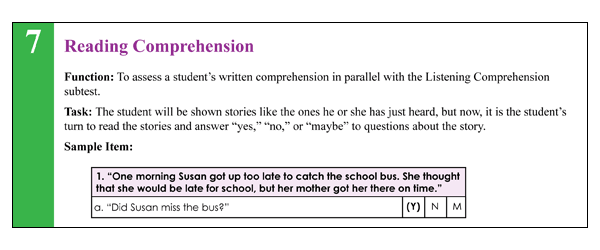
TILLS-subtest-7-reading-comprehension

7. The Reading Comprehension (RC) subtest (description above) requires the students to  read short story and answer story questions in “Yes”, “No’, and “Maybe”  format.   This subtest is not stand alone and must be administered immediately following the administration the Listening Comprehension subtest. The student is asked to read the first story out loud in order to determine whether s/he can proceed with taking this subtest or discontinue due to being an emergent reader. The criterion for administration of the subtest is making 7 errors during the reading of the first story and its accompanying questions. Unfortunately,  in my clinical experience this subtest  is not always accurate at identifying children with reading-based deficits.

While I find it terrific for students with severe-profound reading deficits and/or below average IQ, a number of my students with average IQ and moderately impaired reading skills managed to pass it via a combination of guessing and luck despite being observed to misread aloud between 40-60% of the presented words. Be mindful of the fact that typically  such students may have up to 5-6  errors during the reading of the first story. Thus, according to administration guidelines these students will be allowed to proceed and take this subtest.  They will then continue to make text misreadings  during each story presentation (you will know that by asking them to read each story aloud vs. silently).   However,  because the response mode is in definitive (“Yes”, “No’, and “Maybe”) vs. open ended question format,  a number of these students  will earn average scores by being successful guessers. Recommendation:  I highly recommend supplementing the administration of this subtest with grade level (or below grade level) texts (see HERE and/or HERE),  to assess the student’s reading comprehension informally.

I present a full  one page text to the students and ask them to read it to me in its entirety.   I audio/video record  the student’s reading for further analysis (see Reading Fluency section below).   After the  completion of the story I ask  the student questions with a focus on main idea comprehension and vocabulary definitions.   I also ask questions pertaining to story details.   Depending on the student’s age  I may ask them  abstract/ factual text questions with and without text access.  Overall, I find that informal administration of grade level (or even below grade-level) texts coupled with the administration of standardized reading tests provides me with a significantly better understanding of the student’s reading comprehension abilities rather than administration of standardized reading tests alone.
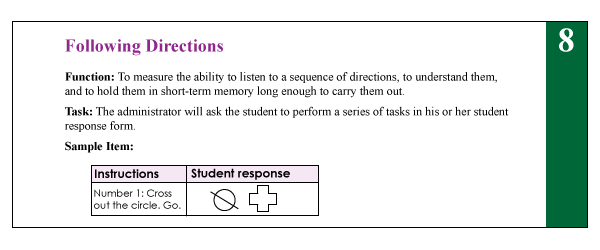
TILLS-subtest-8-following-directions

8. The Following Directions (FD) subtest (description above) measures the student’s ability to execute directions of increasing length and complexity.  It measures the student’s short-term, immediate and working memory, as well as their language comprehension.  What is interesting about the administration of this subtest is that the graphic symbols (e.g., objects, shapes, letter and numbers etc.) the student is asked to modify remain covered as the instructions are given (to prevent visual rehearsal). After being presented with the oral instruction the students are expected to move the card covering the stimuli and then to executive the visual-spatial, directional, sequential, and logical if–then the instructions  by marking them on the response form.  The fact that the visual stimuli remains covered until the last moment increases the demands on the student’s memory and comprehension.  The subtest was created to simulate teacher’s use of procedural language (giving directions) in classroom setting (as per developers).
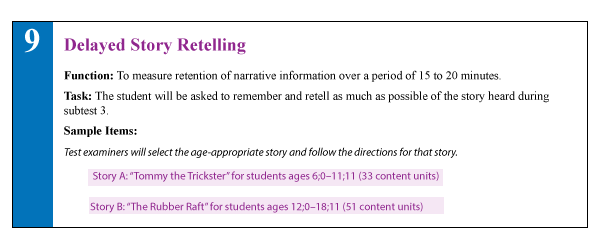
TILLS-subtest-9-delayed-story-retelling

9. The Delayed Story Retelling (DSR) subtest (description above) needs to be administered to the students during the same session as the Story Retelling (SR) subtest, approximately 20 minutes after the SR subtest administration.  Despite the relatively short passage of time between both subtests, it is considered to be a measure of long-term memory as related to narrative retelling of reduced complexity. Here, the examiner can compare student’s performance to determine whether the student did better or worse on either of these measures (e.g., recalled more information after a period of time passed vs. immediately after being read the story).  However, as mentioned previously, some students may recall this previously presented story fairly accurately and as a result may obtain an average score despite a history of teacher/parent reported  long-term memory limitations.  Consequently, it may be important for the examiner to supplement the administration of this subtest with a recall of a movie/book recently seen/read by the student (a few days ago) in order to compare both performances and note any weaknesses/limitations.
TILLS-subtest-10-nonword-reading

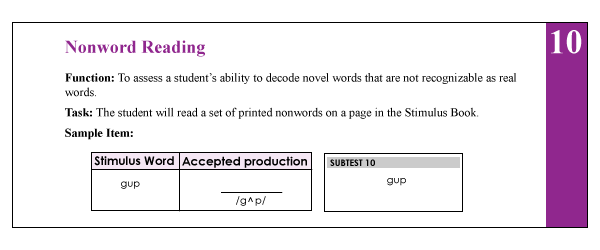
10. The Nonword Reading (NR) subtest (description above) requires students to decode nonsense words of increasing length and complexity. What I love about this subtest is that the students are unable to effectively guess words (as many tend to routinely do when presented with real words). Consequently, the presentation of this subtest will tease out which students have good letter/sound correspondence abilities as well as solid orthographic, morphological and phonological awareness skills and which ones only memorized sight words and are now having difficulty decoding unfamiliar words as a result.      TILLS-subtest-11-reading-fluency
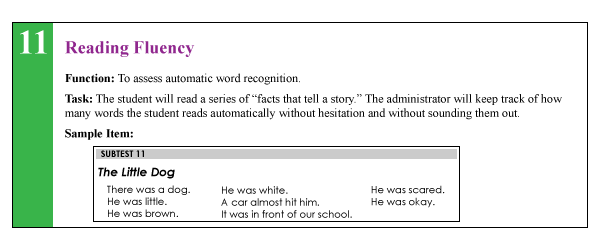
11. The Reading Fluency (RF) subtest (description above) requires students to efficiently read facts which make up simple stories fluently and correctly.  Here are the key to attaining an average score is accuracy and automaticity.  In contrast to the previous subtest, the words are now presented in meaningful simple syntactic contexts.

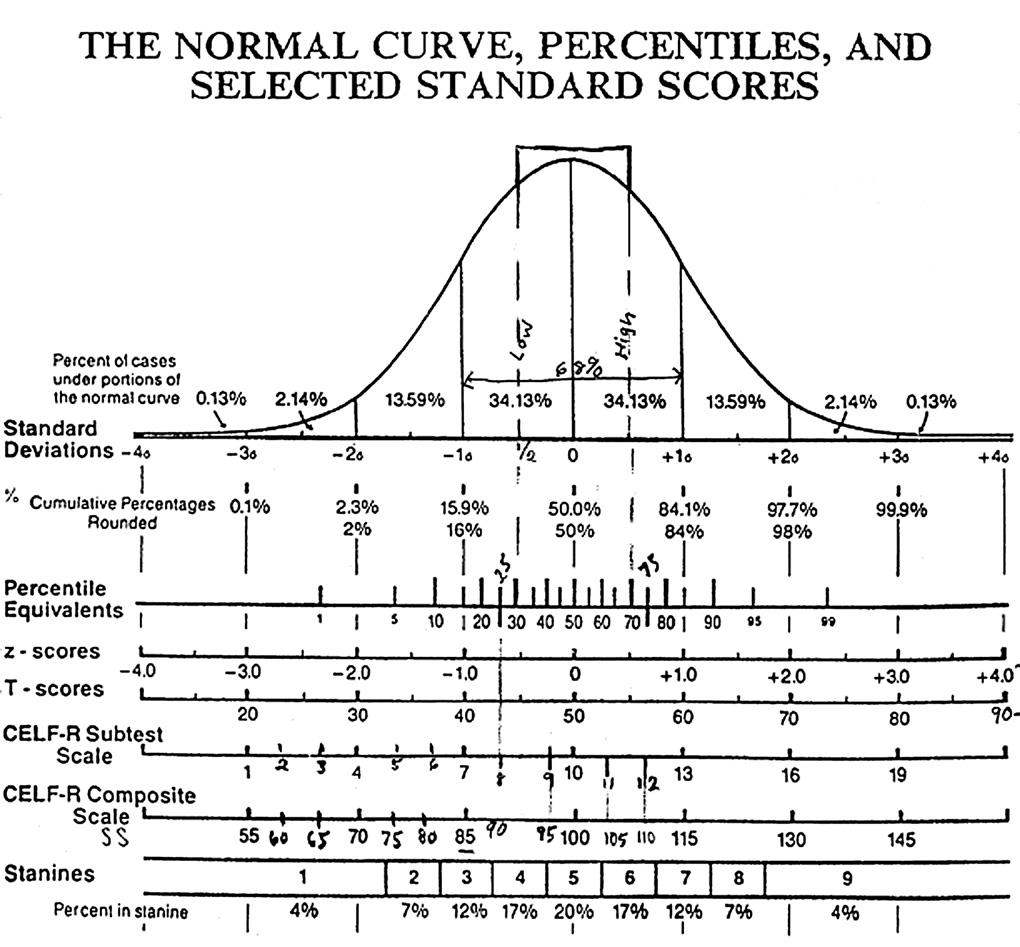
It is important to note that the Reading Fluency subtest of the TILLS has a negatively skewed distribution. As per authors, “a large number of typically developing students do extremely well on this subtest and a much smaller number of students do quite poorly.”

Thus, “the mean is to the left of the mode” (see publisher’s image below). This is why a student could earn an average standard score (near the mean) and a low percentile rank when true percentiles are used rather than NCE percentiles (Normal Curve Equivalent). Tills Q&A – Negative Skew
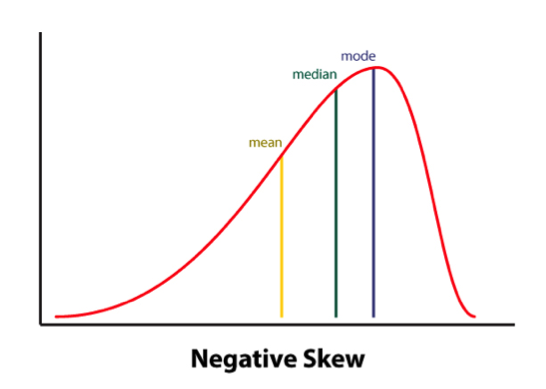
Consequently under certain conditions (See HERE) the percentile rank (vs. the NCE percentile) will be a more accurate representation of the student’s ability on this subtest.

Indeed, due to the reduced complexity of the presented words some students (especially younger elementary aged) may obtain average scores and still present with serious reading fluency deficits.  

I frequently see that in students with average IQ and go to long-term memory, who by second and third grades have managed to memorize an admirable number of sight words due to which their deficits in the areas of reading appeared to be minimized.  Recommendation: If you suspect that your student belongs to the above category I highly recommend supplementing this subtest with an informal measure of reading fluency.  This can be done by presenting to the student a grade level text (I find science and social studies texts particularly useful for this purpose) and asking them to read several paragraphs from it (see HERE and/or HERE).

As the students are reading  I calculate their reading fluency by counting the number of words they read per minute.  I find it very useful as it allows me to better understand their reading profile (e.g, fast/inaccurate reader, slow/inaccurate reader, slow accurate reader, fast/accurate reader).   As the student is reading I note their pauses, misreadings, word-attack skills and the like. Then, I write a summary comparing the students reading fluency on both standardized and informal assessment measures in order to document students strengths and limitations.
TILLS-subtest-12-written-expression

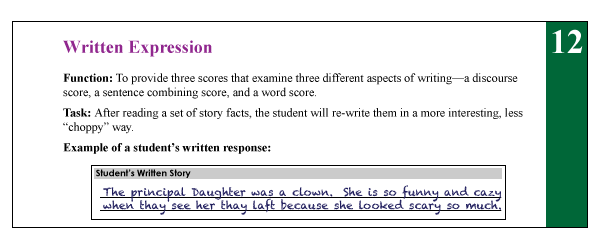
12. The Written Expression (WE) subtest (description above) needs to be administered to the students immediately after the administration of the Reading Fluency (RF) subtest because the student is expected to integrate a series of facts presented in the RF subtest into their writing sample. There are 4 stories in total for the 4 different age groups.

The examiner needs to show the student a different story which integrates simple facts into a coherent narrative. After the examiner reads that simple story to the students s/he is expected to tell the students that the story is  okay, but “sounds kind of “choppy.” They then need to show the student an example of how they could put the facts together in a way that sounds more interesting and less choppy  by combining sentences (see below). Finally, the examiner will ask the students to rewrite the story presented to them in a similar manner (e.g, “less choppy and more interesting.”)

tills

After the student finishes his/her story, the examiner will analyze it and generate the following scores: a discourse score, a sentence score, and a word score. Detailed instructions as well as the Examiner’s Practice Workbook are provided to assist with scoring as it takes a bit of training as well as trial and error to complete it, especially if the examiners are not familiar with certain procedures (e.g., calculating T-units).

Full disclosure: Because the above subtest is still essentially sentence combining, I have only used this subtest a handful of times with my students. Typically when I’ve used it in the past, most of my students fell in two categories: those who failed it completely by either copying text word  for word, failing to generate any written output etc. or those who passed it with flying colors but still presented with notable written output deficits. Consequently, I’ve replaced Written Expression subtest administration with the administration of written standardized tests, which I supplement with an informal grade level expository, persuasive, or narrative writing samples.

Having said that many clinicians may not have the access to other standardized written assessments, or lack the time to administer entire standardized written measures (which may frequently take between 60 to 90 minutes of administration time). Consequently, in the absence of other standardized writing assessments, this subtest can be effectively used to gauge the student’s basic writing abilities, and if needed effectively supplemented by informal writing measures (mentioned above).
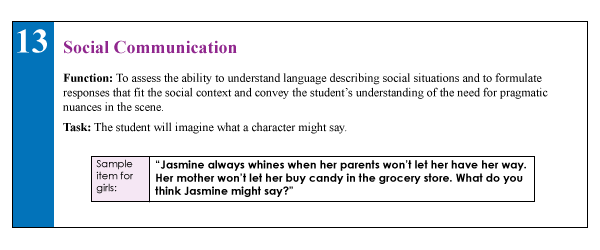
TILLS-subtest-13-social-communication

13. The Social Communication (SC) subtest (description above) assesses the students’ ability to understand vocabulary associated with communicative intentions in social situations. It requires students to comprehend how people with certain characteristics might respond in social situations by formulating responses which fit the social contexts of those situations. Essentially students become actors who need to act out particular scenes while viewing select words presented to them.

Full disclosure: Similar to my infrequent administration of the Written Expression subtest, I have also administered this subtest very infrequently to students.  Here is why.

I am an SLP who works full-time in a psychiatric hospital with children diagnosed with significant psychiatric impairments and concomitant language and literacy deficits.  As a result, a significant portion of my job involves comprehensive social communication assessments to catalog my students’ significant deficits in this area. Yet, past administration of this subtest showed me that number of my students can pass this subtest quite easily despite presenting with notable and easily evidenced social communication deficits. Consequently, I prefer the administration of comprehensive social communication testing when working with children in my hospital based program or in my private practice, where I perform independent comprehensive evaluations of language and literacy (IEEs).

Again, as I’ve previously mentioned many clinicians may not have the access to other standardized social communication assessments, or lack the time to administer entire standardized written measures. Consequently, in the absence of other social communication assessments, this subtest can be used to get a baseline of the student’s basic social communication abilities, and then be supplemented with informal social communication measures such as the Informal Social Thinking Dynamic Assessment Protocol (ISTDAP) or observational social pragmatic checklists

TILLS-subtest-14-digit-span-forward

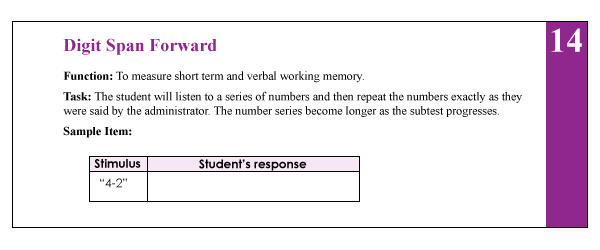
14.  The Digit Span Forward (DSF) subtest (description above) is a relatively isolated  measure  of short term and verbal working memory ( it minimizes demands on other aspects of language such as syntax or vocabulary).
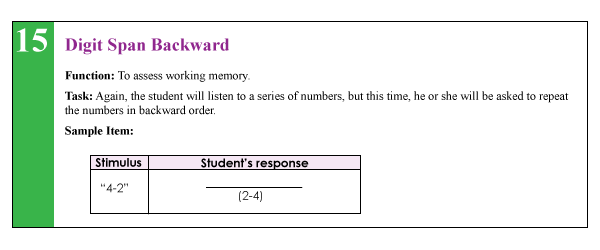
TILLS-subtest-15-digit-span-backward

15.  The Digit Span Backward (DSB) subtest (description above) assesses the student’s working memory and requires the student to mentally manipulate the presented stimuli in reverse order. It allows examiner to observe the strategies (e.g. verbal rehearsal, visual imagery, etc.) the students are using to aid themselves in the process.  Please note that the Digit Span Forward subtest must be administered immediately before the administration of this subtest.

SLPs who have used tests such as the Clinical Evaluation of Language Fundamentals – 5 (CELF-5) or the Test of Auditory Processing Skills – Third Edition (TAPS-3) should be highly familiar with both subtests as they are fairly standard measures of certain aspects of memory across the board.

To continue, in addition to the presence of subtests which assess the students literacy abilities, the TILLS also possesses a number of interesting features.

For starters, the TILLS Easy Score, which allows the examiners to use their scoring online. It is incredibly easy and effective. After clicking on the link and filling out the preliminary demographic information, all the examiner needs to do is to plug in this subtest raw scores, the system does the rest. After the raw scores are plugged in, the system will generate a PDF document with all the data which includes (but is not limited to) standard scores, percentile ranks, as well as a variety of composite and core scores. The examiner can then save the PDF on their device (laptop, PC, tablet etc.) for further analysis.

The there is the quadrant model. According to the TILLS sampler (HERE)  “it allows the examiners to assess and compare students’ language-literacy skills at the sound/word level and the sentence/ discourse level across the four oral and written modalities—listening, speaking, reading, and writing” and then create “meaningful profiles of oral and written language skills that will help you understand the strengths and needs of individual students and communicate about them in a meaningful way with teachers, parents, and students. (pg. 21)”

tills quadrant model

Then there is the Student Language Scale (SLS) which is a one page checklist parents,  teachers (and even students) can fill out to informally identify language and literacy based strengths and weaknesses. It  allows for meaningful input from multiple sources regarding the students performance (as per IDEA 2004) and can be used not just with TILLS but with other tests or in even isolation (as per developers).

Furthermore according to the developers, because the normative sample included several special needs populations, the TILLS can be used with students diagnosed with ASD,  deaf or hard of hearing (see caveat), as well as intellectual disabilities (as long as they are functioning age 6 and above developmentally).

According to the developers the TILLS is aligned with Common Core Standards and can be administered as frequently as two times a year for progress monitoring (min of 6 mos post 1st administration).

With respect to bilingualism examiners can use it with caution with simultaneous English learners but not with sequential English learners (see further explanations HERE).   Translations of TILLS are definitely not allowed as they will undermine test validity and reliability.

So there you have it these are just some of my very few impressions regarding this test.  Now to some of you may notice that I spend a significant amount of time pointing out some of the tests limitations. However, it is very important to note that we have research that indicates that there is no such thing as a “perfect standardized test” (see HERE for more information).   All standardized tests have their limitations

Having said that, I think that TILLS is a PHENOMENAL addition to the standardized testing market, as it TRULY appears to assess not just language but also literacy abilities of the students on our caseloads.

That’s all from me; however, before signing off I’d like to provide you with more resources and information, which can be reviewed in reference to TILLS.  For starters, take a look at Brookes Publishing TILLS resources.  These include (but are not limited to) TILLS FAQ, TILLS Easy-Score, TILLS Correction Document, as well as 3 FREE TILLS Webinars.   There’s also a Facebook Page dedicated exclusively to TILLS updates (HERE).

But that’s not all. Dr. Nelson and her colleagues have been tirelessly lecturing about the TILLS for a number of years, and many of their past lectures and presentations are available on the ASHA website as well as on the web (e.g., HERE, HERE, HERE, etc). Take a look at them as they contain far more in-depth information regarding the development and implementation of this groundbreaking assessment.

To access TILLS fully-editable template, click HERE

Disclaimer:  I did not receive a complimentary copy of this assessment for review nor have I received any encouragement or compensation from either Brookes Publishing  or any of the TILLS developers to write it.  All images of this test are direct property of Brookes Publishing (when clicked on all the images direct the user to the Brookes Publishing website) and were used in this post for illustrative purposes only.

References: 

Leclercq A, Maillart C, Majerus S. (2013) Nonword repetition problems in children with SLI: A deficit in accessing long-term linguistic representations? Topics in Language Disorders. 33 (3) 238-254.

Related Posts:

Posted on 6 Comments

Intervention at the Last Moment or Why We Need Better Preschool Evaluations

“Well, the school did their evaluations and he doesn’t qualify for services” tells me a parent of a 3.5 year old, newly admitted private practice client.  “I just don’t get it” she says bemusedly, “It is so obvious to anyone who spends even 10 minutes with him that his language is nowhere near other kids his age!” “How can this happen?” she asks frustratedly?

This parent is not alone in her sentiment. In my private practice I frequently see preschool children with speech language impairments who for all intents and purposes should have qualified for preschool- based speech language services but do not due to questionable testing practices.

To illustrate, several years ago in my private practice, I started seeing a young preschool girl, 3.2 years of age. Just prior to turning 3, she underwent a collaborative school-based social, psychological, educational, and speech language evaluation.  The 4 combined evaluators from each field only used one standardized assessment instrument “The Battelle Developmental Inventory – Second Edition (BDI-2)” along with a limited ‘structured observation’, without performing any functional or dynamic assessments and found the child to be ineligible for services on account of a low average total score on the BDI-2.

However, during the first session working 1:1 with this client at the age of 3.2 a number of things became very apparent.  The child had very limited highly echolalic verbal output primarily composed of one-word utterances and select two-word phrases.  She had highly limited receptive vocabulary and could not consistently point to basic pictures denoting common household objects and items (e.g., chair, socks, clock, sun, etc.)  Similarly, expressively she exhibited a number of inconsistencies when labeling simple nouns (e.g., called tree a flower, monkey a dog, and sofa a chair, etc.)  Clearly this child’s abilities were nowhere near age level, so how could she possibly not qualify for preschool based services?

Further work with the child over the next several years yielded slow, labored, and inconsistent gains in the areas of listening, speaking, and social communication.  I’ve also had a number of concerns regarding her intellectual abilities that I had shared with the parents.  Finally, two years after preschool eligibility services were denied to this child, she underwent a second round of re-evaluations with the school district at the age of 5.2.

This time around she qualified with bells on! The same speech language pathologist and psychologist who assessed her first time around two years ago, now readily documented significant communication (Preschool Language Scale-5-PLS-5 scores in the 1st % of functioning) and cognitive deficits (Full Scale Intelligence Quotient-FSIQ in low 50’s).

Here is the problem though. This is not a child who had suddenly regressed in her abilities.  This is a child who actually had improved her abilities in all language domains due to private language therapy services.  Her deficits very clearly existed at the time of her first school-based assessment and had continued to persist over time. For the duration of two years this child could have significantly benefited from free and appropriate education in school setting, which was denied to her due to highly limited preschool assessment practices.

Today, I am writing this post to shed light on this issue, which I’m pretty certain is not just confined to the state of New Jersey.  I am writing this post not simply to complain but to inform parents and educators alike on what actually constitutes an appropriate preschool speech-language assessment.

As per NJAC 6A:14-2.5  Protection in evaluation procedures (pgs. 29-30)

(a) In conducting an evaluation, each district board of education shall:

  1. Use a variety of assessment tools and strategies to gather relevant functional and developmental information, including information:
  2. Provided by the parent that may assist in determining whether a child is a student with a disability and in determining the content of the student’s IEP; and
  3. Related to enabling the student to be involved in and progress in the general education curriculum or, for preschool children with disabilities, to participate in appropriate activities;
  4. Not use any single procedure as the sole criterion for determining whether a student is a student with a disability or determining an appropriate educational program for the student; and
  5. Use technically sound instruments that may assess the relative contribution of cognitive and behavioral factors, in addition to physical or developmental factors.

Furthermore, according to the New Special Education Code: N.J.A.C. 6A:14-3.5(c)10 (please refer to your state’s eligibility criteria to find similar guidelinesthe eligibility of a “preschool child with a disability” applies to any student between 3-5 years of age with an identified disabling condition adversely affecting learning/development  (e.g., genetic syndrome), a 33% delay in one developmental area, or a 25% percent delay in two or more developmental areas below :

  1. Physical, including gross/fine motor and sensory (vision and hearing)
  2. Intellectual
  3. Communication
  4. Social/emotional
  5. Adaptive

—These delays can be receptive (listening) or expressive (speaking) and need not be based on a total test score but rather on all testing findings with a minimum of at least two assessments being performed.  A determination of adverse impact in academic and non-academic areas (e.g., social functioning) needs to take place in order for special education and related services be provided.  Additionally, a delay in articulation can serve as a basis for consideration of eligibility as well.

—Moreover, according to  the —State Education Agencies Communication Disabilities Council (SEACDC) Consulatent for NJ – Fran Liebner, the BDI-2 is not the only test which can be used to determine eligibility, since the nature and scope of the evaluation must be determined based on parent, teacher and IEP team feedback.

In fact, New Jersey’s Special Education Code, N.J.A.C. 6A:14 prescribes no specific test in its eligibility requirements.  While it is true that for NJ districts participating in Indicator 7 (Preschool Outcomes) BDI-2 is a required collection tool it does NOT preclude the team from deciding what other diagnostic tools are needed to assess all areas of suspected disability to determine eligibility. 

Speech pathologists have many tests available to them when assessing young preschool children 2 to 6 years of age.

SELECT SPEECH PATHOLOGY TESTS FOR PRESCHOOL CHILDREN (2-6 years of age)

 Articulation:

  • Sunny Articulation Test (SAPT)** Ages: All (nonstandardized)
  • Clinical Assessment of Articulation and Phonology-2 (CAAP-2) Ages: 2.6+
  • Linguisystems Articulation Test (LAT) Ages: 3+
  • Goldman Fristoe Test of Articulation-3 (GFTA-3)    Ages: 2+

 Fluency:

  • Stuttering Severity Instrument -4 (SSI-4) Ages: 2+
  • Test of Childhood Stuttering (TOCS) Ages 4+

General Language: 

  • Preschool Language Assessment Instrument-2 (PLAI-2)  Ages: 3+
  • Clinical Evaluation of Language Fundamentals -Preschool 2 (CELF-P2) Ages: 3+
  • Test of Early Language Development, Third Edition (TELD-3) Ages: 2+
  • Test of Auditory Comprehension of Language Third Edition (TACL-4)      Ages: 3+
  • Preschool Language Scale-5 (PLS-5)* (use with extreme caution) Ages: Birth-7:11

Vocabulary

  • Receptive One-Word Picture Vocabulary Test-4 (ROWPVT-4)  Ages 2+
  • Expressive One-Word Picture Vocabulary Test-4 (EOWPVT-4) Ages 2+
  • Montgomery Assessment of Vocabulary Acquisition (MAVA) 3+
  • Test of Word Finding-3 (TWF-3) Ages 4.6+

Auditory Processing and Phonological Awareness

  • Auditory Skills Assessment (ASA)    Ages 3:6+
  • Test of Auditory Processing Skills-3 (TAPS-3) Ages 4+
  • Comprehensive Test of Phonological Processing-2 (CTOPP-2) Ages 4+

Pragmatics/Social Communication

  • —Language Use Inventory LUI (O’Neil, 2009) Ages 18-47 months
  • —Children’s Communication Checklist-2 (CCC-2) (Bishop, 2006) Ages 4+

—In addition to administering standardized testing SLPs should also use play scales (e.g., Westby Play Scale, 1980) to assess the given child’s play abilities. This is especially important given that “play—both functional and symbolic has been associated with language and social communication ability.” (Toth, et al, 2006, pg. 3)

Finally, by showing children simple wordless picture books, SLPs can also obtain of wealth of information regarding ——the child’s utterance length, as well as narrative abilities ( a narrative assessment can be performed on a verbal child as young as two years of age).

—Comprehensive school-based speech-language assessments should be the norm and not an exception when determining preschoolers eligibility for speech language services and special education classification.

Consequently, let us ensure that our students receive fair and adequate assessments to have access to the best classroom placements, appropriate accommodations and modifications as well as targeted and relevant therapeutic services. Anything less will lead to the denial of Free Appropriate Public Education (FAPE) to which all students are entitled to!

Helpful Smart Speech Therapy Resources Pertaining to Preschoolers: 

Posted on 3 Comments

Thematic Language Intervention with Language Impaired Children Using Nonfiction Texts

FullSizeRender (3)In the past a number of my SLP colleague bloggers (Communication Station, Twin Sisters SLPs, Practical AAC, etc.) wrote posts regarding the use of thematic texts for language intervention purposes. They discussed implementation of fictional texts such as the use of children’s books and fairy tales to target linguistic goals such as vocabulary knowledge in use, sentence formulation, answering WH questions, as well as story recall and production.

Today I would like to supplement those posts with information regarding the implementation of intervention based on thematic nonfiction texts to further improve language abilities of children with language difficulties.

First, here’s why the use of nonfiction texts in language intervention is important. While narrative texts have high familiarity for children due to preexisting, background knowledge, familiar vocabulary, repetitive themes, etc. nonfiction texts are far more difficult to comprehend. It typically contains unknown concepts and vocabulary, which is then used in the text multiple times. Therefore lack of knowledge of these concepts and related vocabulary will result in lack of text comprehension. According to Duke (2013) half of all the primary read-alouds should be informational text. It will allow students to build up knowledge and the necessary academic vocabulary to effectively participate and partake from the curriculum.

So what type of nonfiction materials can be used for language intervention purposes. While there is a rich variety of sources available, I have had great success using Let’s Read and Find Out Stage 1 and 2 Science Series with clients with varying degrees of language impairment.

Here’s are just a few reasons why I like to use this series.

  • They can be implemented by parents and professionals alike for different purposes with equal effectiveness.
  • They can be implemented with children fairly early beginning with preschool on-wards 
  • The can be used with the following pediatric populations:
    • Language Disordered Children
    • Children with learning disabilities and low IQ
    • Children with developmental disorders and genetic syndromes (Fragile X, Down Syndrome, Autism, etc.)
    • Children with Fetal Alcohol Spectrum Disorders
    • Internationally adopted children with language impairment
    • Bilingual children with language impairment
    • Children with dyslexia and reading disabilities
    • Children with psychiatric Impairments
  • The books are readily available online (Barnes & Noble, Amazon, etc.) and in stores.
  • They are relatively inexpensive (individual books cost about $5-6).
  • Parents or professionals who want to continuously use them seasonally can purchase them in bulk at a significantly cheaper price from select distributors (Source: rainbowresource.com)
  • They are highly thematic, contain terrific visual support, and are surprisingly versatile, with information on topics ranging from animal habitats and life cycles to natural disasters and space.
  • They contain subject-relevant vocabulary words that the students are likely to use in the future over and over again (Stahl & Fairbanks, 1986).
  • The words are already pre-grouped in semantic clusters which create schemes (mental representations) for the students (Marzano & Marzano, 1988).

For example, the above books on weather and seasons contain information  on:

1. Front Formations
2. Water Cycle
3. High & Low Pressure Systems

Let’s look at the vocabulary words from Flash, Crash, Rumble, and Roll  (see detailed lesson plan HERE). (Source: ReadWorks):

Word: water vapor
Context
: Steam from a hot soup is water vapor.

Word: expands
Context: The hot air expands and pops the balloon.

Word: atmosphere
Context:  The atmosphere is the air that covers the Earth.

Word: forecast
Context: The forecast had a lot to tell us about the storm.

Word: condense
Context: steam in the air condenses to form water drops.

These books are not just great for increasing academic vocabulary knowledge and use. They are great for teaching sequencing skills (e.g., life cycles), critical thinking skills (e.g., What do animals need to do in the winter to survive?), compare and contrast skills (e.g., what is the difference between hatching and molting?) and much, much, more!

So why is use of nonfiction texts important for strengthening vocabulary knowledge and words in language impaired children?

As I noted in my previous post on effective vocabulary instruction (HERE): “teachers with many struggling children often significantly reduce the quality of their own vocabulary unconsciously to ensure understanding(Excerpts from Anita Archer’s Interview with Advance for SLPs).  

The same goes for SLPs and parents. Many of them are under misperception that if they teach complex subject-related words like “metamorphosis” or “vaporization” to children with significant language impairments or developmental disabilities that these students will not understand them and will not benefit from learning them.

However, that is not the case! These students will still significantly benefit from learning these words, it will simply take them longer periods of practice to retain them!

By simplifying our explanations, minimizing verbiage and emphasizing the visuals, the books can be successfully adapted for use with children with severe language impairments.  I have had parents observe my intervention sessions using these books and then successfully use them in the home with their children by reviewing the information and reinforcing newly learned vocabulary knowledge.

Here are just a few examples of prompts I use in treatment with more severely affected language-impaired children:

  • —What do you see in this picture?
  • —This is a _____ Can you say _____
  • What do you know about _____?
  • —What do you think is happening? Why?
  • What do you think they are doing? Why?
  • —Let’s make up a sentence with __________ (this word)
  • —You can say ____ or you can say ______ (teaching synonyms)
  • —What would be the opposite of _______? (teaching antonyms)
  • — Do you know that _____(this word) has 2 meanings
    • —1st meaning
    • —2nd meaning
  • How do ____ and _____ go together?

Here are the questions related to Sequencing of Processes (Life Cycle, Water Cycle, etc.)

  • —What happened first?
  • —What happened second?
  • —What happened next?
  • —What happened after that?
  • —What happened last?

As the child advances his/her skills I attempt to engage them in more complex book interactions—

  • —Compare and contrast items
  • — (e.g. objects/people/animals)
  • —Make predictions and inferences about will happen next?
  • Why is this book important?

“Picture walks” (flipping through the pages) of these books are also surprisingly effective for activation of the student’s background knowledge (what a student already knows about a subject). This is an important prerequisite skill needed for continued acquisition of new knowledge. It is important because  “students who lack sufficient background knowledge or are unable to activate it may struggle to access, participate, and progress through the general curriculum” (Stangman, Hall & Meyer, 2004).

These book allow for :

1.Learning vocabulary words in context embedded texts with high interest visuals

2.Teaching specific content related vocabulary words directly to comprehend classroom-specific work

3.Providing multiple and repetitive exposures of vocabulary words in texts

4. Maximizing multisensory intervention when learning vocabulary to maximize gains (visual, auditory, tactile via related projects, etc.)

To summarize, children with significant language impairment often suffer from the Matthew Effect (—“rich get richer, poor get poorer”), or interactions with the environment exaggerate individual differences over time

Children with good vocabulary knowledge learn more words and gain further knowledge by building of these words

Children with poor vocabulary knowledge learn less words and widen the gap between self and peers over time due to their inability to effectively meet the ever increasing academic effects of the classroom. The vocabulary problems of students who enter school with poorer limited vocabularies only worsen over time (White, Graves & Slater, 1990). We need to provide these children with all the feasible opportunities to narrow this gap and partake from the curriculum in a more similar fashion as typically developing peers. 

Helpful Smart Speech Therapy Resources:

References:

Duke, N. K. (2013). Starting out: Practices to Use in K-3. Educational Leadership, 71, 40-44.

Marzano, R. J., & Marzano, J. (1988). Toward a cognitive theory of commitment and its implications for therapy. Psychotherapy in Private Practice 6(4), 69–81.

Stahl, S. A. & Fairbanks, M. M. “The Effects of Vocabulary Instruction: A Model-based Metaanalysis.” Review of Educational Research 56 (1986): 72-110.

Strangman, N., Hall, T., & Meyer, A. (2004). Background knowledge with UDL. Wakefield, MA: National Center on Accessing the General Curriculum.

White, T. G., Graves, M. F., & Slater W. H. (1990). Growth of reading vocabulary in diverse elementary schools: Decoding and word meaning. Journal of Educational Psychology, 82, 281–290.

Professional Portfolio

Workshops, Lectures, Presentations and Webinars

  • Elleseff, T (2021, Dec 3).  Components of Comprehensive Preschool Evaluations. POWER UP Online Conference, Lavi Institute.
  • Elleseff, T (2021, Dec 2).  Targeted Pragmatic Assessments of School-Aged Children with Psychiatric Diagnoses. POWER UP Online Conference, Lavi Institute.
  • Elleseff, T (2021, Nov 2).  Inattention, Hyperactivity and Impulsivity in At-Risk Children: Differential Diagnosis of ADHD in Speech Language Pathology: Focus on Assessment and Treatment. Webinar for Garfield Public Schools. Garfield, NJ.
  • Elleseff, T (2021, Oct 20) Reading Disorders 101: A Tutorial for Parents and Professionals. Webinar for the Apraxia Kids, Pittsburg, PA.
  • Elleseff, T (2021, Sep 30) On the Value of Language Assessments for Children with Confirmed/Suspected Dyslexia.    Webinar for the Kansas Speech Language Hearing Association Convention, Wichita, KS.
  • Elleseff, T (2021, Sep 30) Improving Critical Thinking Skills via Use of Picture Books in Children with Language Disorders.  Webinar for the Kansas Speech Language Hearing Association Convention, Wichita, KS.
  • Elleseff, T (2021, Sep 2).  Practical Strategies for Monolingual SLPs Assessing and Treating Bilingual Children.  Elmont Union Free School District Webinar, Elmont, NY.
  • Elleseff, T (2021, Aug 25).  A Reading Program is NOT Enough: A Deep Dive into the Dyslexia Diagnosis. International Dyslexia Association Georgia Branch Webinar. Atlanta, GA.
  • Elleseff, T (2021, Aug 5). Clinical Assessment of Grade-Level Reading Abilities: Focus on Fluency and Comprehension. CEU SmartHub Recorded Webinar, Lavi Institute.
  • Elleseff, T (2021, Aug 5). Teaching Emergent Readers via the Synthetic Phonics Approach. CEU SmartHub Recorded Webinar, Lavi Institute.
  • Elleseff, T (2021, Jul 16). Improving Critical Thinking Skills via Use of Picture Books in Children with Language Disorders. The Ohio School Speech Pathology Educational Audiology Coalition Online Webinar
  • Elleseff, T (2021, Jul 16).  Strategies for Monolingual SLPs Assessing and Treating Bilingual Children. The Ohio School Speech Pathology Educational Audiology Coalition Online Webinar
  • Elleseff, T (2021, Jul 15).  Assessing Social Skills in Children with Psychiatric Disturbances. The Ohio School Speech Pathology Educational Audiology Coalition Online Webinar
  • Elleseff, T (2021, Jun 9).  Auditory Processing Disorder Diagnosis: Science or Pseudoscience?  International Dyslexia Association Georgia Branch Online Webinar.
  • Elleseff, T (2021, Mar 5). Accurate Test Selection for Assessment Purposes. POWER UP Online Conference, Lavi Institute.
  • Elleseff, T (2021, Mar 4). Behavior Management for SLPs. POWER UP Online Conference, Lavi Institute.
  • Elleseff, T (2021, Mar 4). Background History Matters: Conducting IEEs. POWER UP Online Conference, Lavi Institute.
  • Elleseff, T (2020, Dec 29). Neuropsychological or Language/Literacy Assessment: Which One is Right for the Student? International Dyslexia Association Georgia Branch Online Webinar.
  • Elleseff, T (2020, Dec 2). Clinical Assessment of Narrative Skills. POWER UP Online Conference, Lavi Institute.
  • Elleseff, T (2020, Oct 20) How Language Affects Reading: What Parents and Professionals Need to Know. BUILD Tredyffrin-Easttown. Online Webinar.
  • Elleseff, T (2020, Aug 27) Measurement and Interpretation of Standardized Reading Assessments for Professionals and Parents (Webinar) EBP REEL TALK, Smart Speech Therapy LLC
  • Elleseff, T (2020, Aug 04) Components of Effective Reading Intervention.  POWER UP Online Conference, Lavi Institute.
  • Elleseff, T (2020, Aug 03) Improving Critical Thinking Skills via Use of Picture Books in Children with Language Disorders. POWER UP, Online Conference, Lavi Institute.
  • Elleseff, T (2020, Feb 27) Assessing Preschool Children with Challenging Behaviors. American Speech Language and Hearing Association Online Conference. Rockville, MD
  • Elleseff, T (2019, Oct 19) On the Value of Language Assessments for Children with Confirmed/Suspected Dyslexia. 41st Annual Conference of the Pennsylvania Branch, International Dyslexia Association (PBIDA). West Conshohocken, PA
  • Elleseff, T (2019, Oct 18) Comorbidity of Language and Literacy Disorders in Children With Psychiatric Impairments: What Psychiatrists Need to Know. 66th Annual Meeting of the American Academy of Child and Adolescent Psychiatry. Chicago, IL
  • Elleseff, T (2019, Oct 16) Assessing Preschool Children with Challenging Behaviors. American Speech Language and Hearing Association Online Conference. Rockville, MD
  • Elleseff, T (2019, Jul 19-21) Behavior Management Strategies for SLPs. American Speech Language and Hearing Association Schools Connect Conference. Chicago, IL
  • Elleseff, T (2019, Jul 19-21) Speech-Language Assessment and Treatment of Children with Alcohol-Related Disorders. American Speech Language and Hearing Association Schools Connect Conference. Chicago, IL
  • Elleseff, T (2019, Jul 19-21) Language Difference vs. Disorder: Assessment Strategies for Children Who Are Bilingual. American Speech Language and Hearing Association Schools Connect Conference. Chicago, IL
  • Elleseff, T (2019, Jun 5) From Wordless Picture Books to Reading Instruction: Effective Strategies for SLPs Working with Intellectually Impaired Students. Workshop for the New York City Board of Education – District 9, Brooklyn, NY
  • Elleseff, T (2019, May 15) Assessing Social Communication from Toddlerhood through Adolescence: What SLPs need to Know. Workshop for the Hamilton County Educational Service Center, Cincinnati, OH.
  • Elleseff, T & Caruso, C (2019, May 2)  Research-Based Treatment Approaches for Childhood Apraxia of Speech Workshop for the New Jersey Speech Language Hearing Association Convention, Long Branch, NJ
  • Elleseff, T (2019, May 1) Practical Strategies for Monolingual SLPs Assessing Bilingual Children Workshop for the New Jersey Speech Language Hearing Association Convention, Long Branch, NJ
  • Elleseff, T (2019, Feb 20) Assessing Preschool Children with Challenging Behaviors Presented for the American Speech Language and Hearing Association Online Conference. Rockville, MD
  • Elleseff, T (2018, Nov 15) Practical Strategies for Monolingual SLPs Assessing Bilingual Children Presented for the American Speech Language and Hearing Association Convention. Boston, MA
  • Elleseff, T (2018, Oct 25) Behavior Management Strategies for Speech-Language Pathologists. Presented for the Milestone Therapeutic Services, Washington, DC.
  • Elleseff, T (2018, Oct 19) Behavior Management Strategies for Speech-Language Pathologists. Scheduled presentation for the Clinical Connection Conference of the Maryland Speech Language and Hearing Association, Baltimore, MD
  • Elleseff, T (2018, Sep 26) Red Flags for Undiagnosed Fetal Alcohol Spectrum Disorders in Children and Adolescents Rutgers Health UBHC Monthly Child Division Lecture Series, Piscataway, NJ
  • Elleseff, T (2018, May 22) Speech, Language, & Literacy Disorders in School Aged Children with Psychiatric Impairments Rutgers Health UBHC Monthly Child Division Lecture Series, Piscataway, NJ
  • Elleseff, T (2018, Feb 16) Impact of Cultural and Linguistic Variables On Speech-Language Services presented for the Eatontown Board of Education, Eatontown, NJ
  • Elleseff, T (2018, Jan 9) Normal Simultaneous Bilingual Language Development and Milestones Acquisition. Webinar presented for the New Jersey Speech Language and Hearing Association. Princeton, NJ.
  • Elleseff, T (2017, Nov 14) Best Practices in Bilingual Language and Literacy Interventions.  Webinar presented for the Speech-Language & Audiology Canada.
  • Elleseff, T (2017, Nov 11) Practical Strategies for Monolingual SLPs Assessing Bilingual Children Presented for the American Speech Language and Hearing Association Convention. Los Angeles, CA.
  • Elleseff, T (2017, Nov 7) Assessment and Treatment of Social-Communication Deficits in Children With/out Psychiatric Impairments. Workshop presented for the Butler County Educational Service Center, Hamilton, OH.
  • Elleseff, T (2017, Oct 19 & 26) From First Words through Preschool: Recognizing the Warning Signs of Language Delay. Development through the Life Cycle Lecture Series. Presented for the Child and Adolescent Psychiatry Medical Residents Rutgers University/Robert Wood Johnson Medical School, Piscataway, NJ 
  • Elleseff, T (2017, Oct 19) Recognizing and Assessing Primary Language Impairment in Bilingual Learners.  Webinar presented for the Speech-Language & Audiology Canada.
  • Elleseff, T (2017, June 15) Behavior Management for SLPs and Assessment of Social Communication in Children with Psychiatric Impairments Workshop presented for the Los Angeles Unified School District, Los Angeles, CA
  • Elleseff, T; Caruso, C (2017, Apr 28) Bilingualism: Birth to Adulthood. Workshop presented at the New Jersey Speech Language Hearing Association Convention, Long Branch, NJ
  • Elleseff, T (2017, Apr 24) From Wordless Picture Books to Reading Instruction: Effective Strategies for SLPs Working with Intellectually Impaired Students. Workshop presented  for the New York City Board of Education – District 75, NY, NY
  • Elleseff, T (2017, Mar 24) Best Practices in Bilingual Language and Literacy Interventions.  Workshop presented for the Speech-Language & Audiology Canada, Montreal, Canada
  • Elleseff, T (2016, Dec 7) Best Practices in Bilingual Language and Literacy Interventions. Workshop presented for the New York City Department of Education: Bilingual Providers Conference. Woodside, NY.
  • Elleseff, T (2016, Nov 8) Narrative Assessments of Preschool and School Aged Children.  Webinar presented for the Greenwich Public Schools, Greenwich CT
  • Elleseff, T (2016, Nov 1). Recognizing the Warning Signs of Social Emotional Difficulties in Language Impaired Toddlers and Preschoolers Workshop presented for the Regional Professional Development Academy. Eatontown, NJ.
  • Elleseff, T (2016, Oct 13 & 20) From First Words through Preschool: Recognizing the Warning Signs of Language Delay. Development Through the Life Cycle Lecture Series. Presented for the Child and Adolescent Psychiatry Fellows Rutgers University/Robert Wood Johnson Medical School, Piscataway, NJ 
  • Elleseff, T (2016, Oct 11) Psychiatric Impairments and Language Disorders in School Aged Children. Presented for the Child and Adolescent Psychiatry Residents Rutgers University/Robert Wood Johnson Medical School, Piscataway, NJ 
  • Elleseff, T (2016, Oct 10) Introduction to Dyslexia and Learning Disabilities.  Lecture presented at Rutgers University Behavioral Health Care: Rutgers Day School. Piscataway, NJ.
  • Elleseff, T (2016, Oct 5) Differential Assessment and Treatment of Processing Disorders in Speech Language Pathology. Workshop presented for the Wayne County Speech Language Hearing Association, Livonia, MI
  • Elleseff, T (2016, July 13) Practical Strategies for Monolingual SLPs Assessing and Treating Bilingual Children. Workshop presented for the Long Island Speech Language Hearing Association, Hauppauge, NY
  • Elleseff, T (2016, May 25) Strategies for Monolingual SLPs Treating Bilingual Children New York City Department of Education: Monolingual Providers Conference. NY, NY.
  • Wesler, J & Elleseff, T (2016, Apr 14) Overview of NJ Education Mandates: The Law and the SLP Workshop presented at the New Jersey Speech Language Hearing Association Convention, Long Branch, NJ
  • Elleseff, T (2016, Mar 4) Assessment and Treatment of Non-Verbal Language Disorder (NVLD) in Speech Language Pathology Workshop presented at the Mississippi Speech Language Hearing Association, Jackson, MS.
  • Elleseff, T (2016, Mar 3) Creating a Functional Therapy Plan and Selecting Clinical Materials for Pediatric Therapy Workshop presented at the Mississippi Speech Language Hearing Association, Jackson, MS.
  • Elleseff, T (2016, Feb 15) Differential Diagnosis of ADHD (and C/APD) in Speech Language Pathology. Workshop presented for the Montville Public Schools. Montville, NJ.
  • Elleseff, T (2015, Dec 4) Translanguaging in the classroom: Tips for educators on enrichment multicultural activities. Session presented at the William Paterson University 35th Bilingual/ESL Conference. Wayne, NJ.
  • Elleseff, T (2015, Dec 3) Assessing and Treating Bilingual Children: Practical Strategies for SLPs. New York City Department of Education: Bilingual Providers Conference. Woodside, NY.
  • Elleseff, T (2015, Nov 3) Assessing Social Communication Skills of School Aged Children Workshop presented for the Linden Public Schools, Linden, NJ.
  • Elleseff, T (2015, Oct 25) Assessment of Children With/Without Psychiatric and Emotional Disturbances from Preschool through Adolescence. Northeastern Speech-Language-Hearing Association of Pennsylvania Pocono Manor, PA.
  • Elleseff, T (2015, Oct 15) Inattention, Hyperactivity and Impulsivity in At-Risk Children: Differential Diagnosis of ADHD in Speech Language Pathology and Education. Regional Professional Development Academy. Eatontown, NJ.
  • Elleseff, T (2015, Sept 1) Assessment of Children With/Without Psychiatric and Emotional Disturbances from Preschool through Adolescence Workshop presented for the Rahway Public Schools, Rahway, NJ
  • Caruso, C & Elleseff, T (2015, April 30) Working with CLD Populations: An Interactive Student Experience. Workshop presented at the New Jersey Speech Language Hearing Association Convention, Long Branch, NJ
  • Elleseff, T (2015, Feb 13) Assessment and Treatment of Social Pragmatic Deficits in School Aged ChildrenWorkshop presented at the 2015 Annual Illinois Speech Hearing Language Association, Chicago, IL
  • Elleseff, T (2014, Dec 5) CLD Learners’ Pathway to Success: A Lexical Enhancement Approach. Session presented at the William Paterson University 34th Bilingual/ESL Conference. Wayne, NJ.
  • Elleseff, T (2014, Nov 10) Creating a Functional Therapy Plan: Therapy Goals & SOAP Note Documentation. Webinar presented for speechpathology.com, San Antonio, TX
  • Elleseff, T (2014, Nov 6) Impact of Cultural and Linguistic Variables on Speech-Language Services. Guest lecture presented at Seton Hall University, South Orange, NJ.
  • Elleseff, T (2014, May 6) Narrative Assessments of Preschool and School Aged Children. Workshop presented at the  Union County Speech and Hearing Association, New Providence, NJ.
  • Elleseff, T (2014, May 2). Speech Language Assessment of Older Internationally Adopted Children. Workshop presented at the New Jersey Speech Language Hearing Association Convention, Long Branch, NJ
  • Elleseff, T (2014, Mar 21) Assessment and Treatment of Social Pragmatic Deficits in School Aged ChildrenLecture presented at the 11th Annual Symposium for Speech Language Specialists. Rowan University, Glassboro, NJ
  • Elleseff, T (2014, Jan 14) Executive Function Impairment and At-Risk Populations. Webinar presented for Advance for Speech Language Pathologists and Audiologists.
  • Elleseff, T (2013, Oct 29) Assessing Social Functioning in Language Impaired Young Children. Webinar presented for Advance for Speech Language Pathologists and Audiologists.
  • Elleseff, T (2013, Oct 17 & 24) From First Words through Preschool: Recognizing the Warning Signs of Language Delay. Development Through the Life Cycle Lecture Series scheduled for the Child and Adolescent Psychiatry Fellows Rutgers University/Robert Wood Johnson Medical School, Piscataway, NJ 
  • Gordina, A, Elleseff, T (2013, Aug 10) Inattention, Hyperactivity and Impulsivity in Adopted and Foster Children. Workshop presented at the 39th North American Council on Adoptable Children, Toronto, CA.
  • Elleseff, T (2013, Jul 16) Impact of Cultural and Linguistic Variables on Speech-Language Services. Webinar presented for the New Jersey Speech Language Hearing Association. Princeton, NJ.
  • Elleseff, T (2013, May 20) Language Difference vs. Language Disorder:  An Overview of Assessment and Intervention Strategies for Speech Language Pathologists Working with Bilingual Children. Workshop presented for the Warren County Speech, Language, Hearing Association, Hackettstown, NJ.
  • Elleseff, T (2013, Mar 25) Fetal Alcohol Spectrum Disorders Part II: Assessment & Intervention.  Webinar presented for speechpathology.com, San Antonio, TX
  • Elleseff, T (2013, Feb 5) Selecting Clinical Materials for Pediatric Therapy. Guest lecture presented at Seton Hall University, South Orange, NJ.
  • Elleseff, T (2013, Jan 28) Fetal Alcohol Spectrum Disorders Part I: Overview of Deficits.  Webinar presented for speechpathology.com, San Antonio, TX
  • Elleseff, T (2013, Jan 22) Creating a Functional Therapy Plan: Therapy Goals & SOAP Note Documentation. Guest lecture presented at Seton Hall University, South Orange, NJ.
  • Elleseff, T (2013, Jan 17) Inattention, Hyperactivity and Impulsivity In At Risk Children: Differential Diagnosis of ADHD in Speech Language Pathology. Webinar presented for Advance for Speech Language Pathologists and Audiologists.
  • Gordina, A, Elleseff, T. (2013, Jan 13). Inattention, Hyperactivity and Impulsivity in Adopted and Foster Children. Workshop presented at the  New Jersey’s 31stAnnual “Let’s Talk Adoption”sm Conference Piscataway, NJ
  • Gordina, A, Elleseff, T. (2013, Jan 13). Sobering Thoughts on Attitudes Towards the Fetal Alcohol Spectrum Disorders. Workshop presented at the New Jersey’s 31st Annual “Let’s Talk Adoption”sm Conference Piscataway, NJ
  • Elleseff, T (2013, Nov 15) Language Difference vs. Language Disorder: Assessment  & Intervention Strategies for SLPs Working with Bilingual Children.  Workshop presented for Educational Service Unit #3, Omaha, NE.
  • Elleseff, T (2012, Oct 28) Behavior Management Strategies for Related Professionals. Session presented for the New Jersey Occupational Therapy Association, 38th Annual Convention. Seton Hall University, South Orange, NJ.
  • Elleseff, T (2012, Oct 24) Narrative Assessments of Preschool and School Aged Children. Session presented for the Morris County Speech and Hearing Association, Whippany, NJ.
  • Elleseff, T (2012, Oct 18) Psychiatric Impairments and Language Disorders in School Aged Children:
    Why Psychiatrists and Speech Pathologists Should Collaborate More Together.
    Development Through the Life Cycle Lecture Series for the Child and Adolescent Psychiatry Fellows University of Medicine and Dentistry of New Jersey/Robert Wood Johnson Medical School, Piscataway, NJ 
  • Elleseff, T (2012, Oct 11) From First Words through Preschool: Recognizing the Warning Signs of Language Delay. Development Through the Life Cycle Lecture Series for the Child and Adolescent Psychiatry Fellows University of Medicine and Dentistry of New Jersey/Robert Wood Johnson Medical School, Piscataway, NJ 
  • Gordina, A,  Elleseff, T, & Shifrin, L (2012, Jul 27) Inattention, Hyperactivity and Impulsivity in Adopted and Foster Children. Workshop presented at the 38th North American Council on Adoptable Children, Crystal City, VA.
  • Elleseff, T (2012, July) Improving Social Skills of Children with Psychiatric Disturbances.   Webinar presented for speechpathology.com, San Antonio, TX
  • Elleseff, T (2012, May) Assessing Social Skills of Children with Psychiatric Disturbances.   Webinar presented for speechpathology.com, San Antonio, TX
  • Elleseff, T (2012, April) Behavior Management Strategies for School Based Speech Language Pathologists Workshop presented at New Jersey Speech Language Hearing Association Convention, Long Branch, NJ
  • Elleseff, T (2012, April) Social Pragmatic Assessment of Children Diagnosed with Emotional/Psychiatric Disturbances in the Schools. Workshop presented at New Jersey Speech Language Hearing Association Convention, Long Branch, NJ
  • Elleseff, T (2012, Jan) Special Considerations and Challenges in Assessment and Treatment of Bilingual Children with Developmental Disabilities. Workshop presented for Middlesex Regional Educational Services Commission, Metuchen NJ.
  • Gordina, A & Elleseff, T (2011, Oct) A Case of Isolated Social Pragmatic Language Deficits and Sensory Integration Dysfunction  in an Internationally Adopted Child: Implications for Medical Referral   Workshop presented at the American Academy of Pediatrics: Council on Foster Care, Adoption and Kinship Care, Boston, MA.
  • Gordina, A, Elleseff, T, & Shifrin, L (2011, Oct) Inattention, Hyperactivity and Impulsivity in At-Risk Children Workshop presented at the Opening Doors: Partnerships for Prevention and Healing, New Jersey Taskforce on Child Abuse and Neglect, East Brunswick, NJ.
  • Elleseff, T (2011, June) The Role of Frontal Lobe in Speech and Language Functions.  Lecture presented at the University of Medicine and Dentistry of New Jersey: Child Therapeutic Day Program. Piscataway, NJ.

Article Publications

  • Elleseff, T (2016)  Embracing ‘Translanguaging’ Practices: A Tutorial for SLPs New Jersey Speech Language Hearing Association.  VOICES, Summer, 9.
  • Elleseff, T (2015, Aug). Assessing social communication of school-aged children Perspectives on School-Based Issues  16 (3): 79-86
  • Caruso, C, Concepcion-Escano, Y & Elleseff, T (2015, Jan). Technical Manual: A guide for the appropriate assessment of culturally & linguistically diverse and internationally adopted individuals. New Jersey Speech Language Hearing Association.
  • Elleseff, T (2014).  Creating Successful Team Collaboration: Behavior Management in the Schools. Perspectives on School-Based Issues, 15(1): 37-43.
  • Elleseff, T (2014). ELL Spotlight on Russian: Considerations for Assessment and Treatment. New Jersey Speech Language Hearing Association: VOICES, Winter: 9-11.
  • Elleseff, T (2013, Dec) Recognizing FASD-Related Speech and Language Deficits in Internationally Adopted Children. National Adoption Advocate. No. 66, pp 1-8.
  • Elleseff, T(2013) Changing Trends in International Adoption: Implications for Speech-Language Pathologists. Perspectives on Global Issues in Communication Sciences and Related Disorders, 3: 45-53
  • Elleseff, T (2013, Aug) FASD and Background History Collection: Asking the Right Questions Adoption Today, pp 32-35.
  • Elleseff, T (2012, Dec 24) Understanding the risks of social pragmatic deficits in post institutionalized internationally adopted children. Published in Advance for Speech Language Pathologists and Audiologists. Pp 6-9.
  • Elleseff, T (Jan 2, 2012) Speech-Language Strategies for Multisensory Stimulation of Internationally Adopted Children:   Activity Suggestions for Parents and Professionals. Adoption Today Magazine. pp 40-43.
  • Elleseff, T (Nov 16, 2011) The importance of pediatric orofacial assessments in speech pathology. Advance for Speech Language Pathologists and Audiologists
  • Elleseff, T (Oct 1, 2011) Understanding the extent of speech and language delays in older internationally adopted children: Implications for School Based Speech and Language Intervention Adoption Today Magazine, pp 32-35
  • Elleseff, T (June 6, 2011) Differential diagnosis of AD/HD and Auditory Processing Disorders in Internationally Adopted School Age Children Post Adoption Learning Center, International Adoptions Articles Directory
  • Elleseff, T (Mar 14, 2011) What are social pragmatic language deficits and how do they impact international adoptees years post adoption?  Post Adoption Learning Center, International Adoptions Articles Directory
  • Elleseff, T (Feb 23, 2011) A case for early speech-language assessments of adopted children in the child’s birth language Post Adoption Learning Center, International Adoptions Articles Directory
  • Elleseff, T (June 30, 2009) How to improve the feeding abilities of young adopted picky eaters Post Adoption Learning Center, International Adoptions Articles Directory
  • Elleseff, T (May 27, 2009) Speech Language Services and Insurance Coverage: What Parents Need to Know Post Adoption Learning Center, International Adoptions Articles Directory
  • Elleseff, T (May 11, 2009) How to select the right speech language pathologist for your adopted child? Post Adoption Learning Center, International Adoptions Articles Directory
  • Elleseff, T (Feb 20, 2009) Functional Strategies for Improving the Language Abilities of Your Adopted School-Age Child  Post Adoption Learning Center, International Adoptions Articles Directory
  • Elleseff, T (Feb 15, 2009) Creating a learning rich environment to facilitate language development in adopted preschoolers.  Post Adoption Learning Center, International Adoptions Articles Directory

ASHA Leader Blog Contributions:


Posted on 8 Comments

Comprehending Reading Comprehension

Image of three books open on a table with stacks of books in the background.How many parents and professionals have experienced the following scenario? The child in question is reading very fluently (Landi & Ryherd, 2017) but comprehending very little of what s/he is reading.  Attempts at remediation follow (oftentimes without the administration of a comprehensive assessment) with a focus on reading texts and answering text-related questions. However, much to everyone’s dismay the problem persists and worsens over time. The child’s mental health suffers as a result since numerous studies show that reading deficits including dyslexia are associated with depression, anxiety, attention, as well as behavioral problems (Arnold et al., 2005; Knivsberg & Andreassen, 2008; Huc-Chabrolle, et al, 2010; Kempe, Gustafson, & Samuelsson, 2011Boyes, et al, 2016;   Livingston et al, 2018). Continue reading Comprehending Reading Comprehension

Posted on 5 Comments

On the Limitations of Using Vocabulary Tests with School-Aged Students

Those of you who read my blog on a semi-regular basis, know that I spend a considerable amount of time in both of my work settings (an outpatient school located in a psychiatric hospital as well as private practice), conducting language and literacy evaluations of preschool and school-aged children 3-18 years of age. During that process, I spend a significant amount of time reviewing outside speech and language evaluations. Interestingly, what I have been seeing is that no matter what the child’s age is (7 or 17), invariably some form of receptive and/or expressive vocabulary testing is always mentioned in their language report. Continue reading On the Limitations of Using Vocabulary Tests with School-Aged Students

Posted on 2 Comments

Tips on Reducing ‘Summer Learning Loss’ in Children with Language/Literacy Disorders

Related imageThe end of the school year is almost near. Soon many of our clients with language and literacy difficulties will be going on summer vacation and enjoying their time outside of school. However, summer is not all fun and games.  For children with learning needs, this is also a time of “learning loss”, or the loss of academic skills and knowledge over the course of the summer break.  Students diagnosed with language and learning disabilities are at a particularly significant risk of greater learning loss than typically developing students. Continue reading Tips on Reducing ‘Summer Learning Loss’ in Children with Language/Literacy Disorders

Posted on 3 Comments

Social Communication and Describing Skills: What is the Connection?

When it comes to the identification of social communication deficits, SLPs are in a perpetual search for quick and reliable strategies that can assist us in our quest of valid and reliable confirmation of social communication difficulties. The problem is that in some situations, it is not always functional to conduct a standardized assessment, while in others a standardized assessment may have limited value (e.g., if the test doesn’t assess or limitedly assesses social communication abilities).

So what type of tasks are sensitive to social communication deficits? Quite a few, actually. For starters, various types of narratives are quite sensitive to social communication impairment. From fictional to expository, narrative analysis can go a long way in determining whether the student presents with appropriate sequencing skills, adequate working memory, age-level grammar, and syntax, adequate vocabulary, pragmatics, perspective taking abilities, critical thinking skills, etc. But what if one doesn’t have the time to record and transcribe a narrative retelling, what then? Actually, a modified version of a narrative assessment task can still reveal a great deal about the student’s social communication abilities.

For the purpose of this particular task, I like to use photos depicting complex social communication scenarios. Then I simply ask the student: “Please describe  what is happening in this photo.”  Wait a second you may say: “That’s it? This is way too simple! You can’t possibly determine if someone has social communication deficits based on a single photo description!”

I beg to differ. Here’s an interesting fact about students with social communication deficits. Even the ones with FSIQ in the superior range of functioning (>130) with exceptionally large lexicons, still present with massive deficits when it comes to providing coherent and cohesive descriptions and summaries.

Here are just a few reasons why this happens. Research indicates that students with social communication difficulties present with Gestalt Processing deficits or difficulty “seeing/grasping the big picture”(Happe & Frith, 2006). Rather than focusing on the main idea, they tend to focus on isolated details due to which they have a tendency to provide an incomplete/partial information about visual scenes, books, passages, stories, or movies. As such, despite possessing an impressive lexicon, such students may say about the above picture: “She is drawing” or “They are outside” and omit a number of relevant to the picture details.

Research also confirms that another difficulty that students with impaired social communication abilities present with is assuming perspectives of others (e.g., relating to others, understanding/interpreting their beliefs, thoughts, feelings, etc.) (Kaland et al, 2007). As such they may miss relevant visual clues pertaining to how the boy and girl are feeling, what they are thinking, etc.

Students with social communication deficits also present with anaphoric referencing difficulties.  Rather than referring to individuals in books and pictures by name or gender, they may nonspecifically utilize personal pronouns ‘he’, ‘she’ or ‘they’ to refer to them. Consequently, they may describe the individuals in the above photo as follows: “She is drawing and the boy is looking”; or “They are sitting at the table outside.”

Finally, students with social communication deficits may produce poorly constructed run-on (exceedingly verbose) or fragmented utterances (very brief) lacking in coherence and cohesion to describe the main idea in the above scenario (Frith, 1989).

Of course, by now many of you want to know regarding what constitutes as pragmatically appropriate descriptions for students of varying ages. For that, you can visit a thread in the SLPs for Evidence-Based Practice Group on Facebook entitled: GIANT POST WITH FREE LINKS AND RESOURCES ON THE TOPIC OF TYPICAL SPEECH AND LANGUAGE MILESTONES OF CHILDREN 0-21 YEARS OF AGE  to locate the relevant milestones by age.

Interested in seeing these assessment strategies in action? Download a FREEBIE HERE and see for yourselves.

References:

  • Frith, U., (1989). Autism: Explaining the Enigma. Blackwell, Oxford.
  • Happe, F. & Frith, U. (2006). The weak coherence account: Detail-focused cognitive style in Autism Spectrum Disorders. Journal of Autism and Developmental Disorders, 36 (1), 5-25.
  • Kaland, N., Callesen, K., Moller-Nielsen, A., Mortensen, E. L., & Smith, L. (2007). Performance of children and adolescents with Asperger Syndrome or High-functioning Autism on advanced theory of mind tasks. Journal of Autism and Developmental Disorders. 38, 1112-1123.