
Evidence Based Narrative Interventions via Use of Picture Books
 Those of you who follow my blog know that in my primary job as an SLP working for a psychiatric hospital, I assess and treat language and literacy impaired students with significant emotional and behavioral disturbances. I often do so via the aid of picture books (click HERE for my previous posts on this topic) dealing with a variety of social communication topics. Continue reading Using Picture Books to Teach Children That It’s OK to Make Mistakes and Take Risks
 Picture books are absolutely wonderful for both assessment and treatment purposes! They are terrific as narrative elicitation aids for children of various ages, ranging from pre-K through fourth grade. They are amazing treatment aids for addressing a variety of speech, language, and literacy goals that extend far beyond narrative production. Continue reading Speech, Language, and Literacy Fun with Helen Lester’s Picture Books


 Critical thinking are a set of skills children need to make good independent decisions. Critical thinking abilities involve children analyzing, synthesizing and evaluating information in order to recognize patterns, distinguish right from wrong, offer opinions, anticipate reactions to their actions, compare scenarios to choose favorable outcomes, as well as consider a variety of solutions to the same problem.
Even for typically developing children critical thinking can at times be a bit of a challenge and needs to be nurtured and encouraged through a variety of ways. However, for language impaired children, critical thinking skills hierarchy needs to be explicitly addressed in therapy sessions in order to improve these children’s independent decision-making abilities.
Teaching critical thinking skills to language impaired students is no easy feat especially considering the “seriousness” of the subject matter. One fun way I like to address critical thinking skills is through picture books utilizing the framework outlined in Bloom’s Taxonomy: Cognitive Domain which encompasses the following categories: knowledge, comprehension, application, analysis, synthesis, and evaluation.
Prior to story reading ask the children to flip through the pictures and ask them questions regarding what the story might be about and what could be some potential story problems based on provided pictures.
During story reading actively question the child to ensure that they are not just passive story listeners (e.g., “Why do you think…?). Begin with basic story recall of characters, events, and outcomes (knowledge). Here asking simple -wh- questions will do the trick. Then move on to checking on what the child has done with the knowledge by asking him/her to identify main ideas of the stories as well as associate, compare, contrast and classify information (comprehension).
As you are reading the story as students to compare and contrast different characters as well as different story situations. Children can also critically compare different (satirical) story versions of popular tales like Cinderella, Little Red Riding Hood, Jack and the Beanstalk, etc.
Involve children in active story discussion and analysis by asking questions the answers to which are not directly found in the story (e.g., Who else do you know who also…?; Why do you think the ___did that?) Ask the student to identify each characters motives. When looking at a particular problem in the story ask the student how they would solve a similar real-life problem (application).
Have them weigh in pros and cons of the characters choices. Make a ridiculous statement about a story or character and have the students argue with you and explain constructively why they disagree with it. It will teach them how to find weaknesses in someone else’s reasoning. Ask the children to synthesize the presented story by generalizing it to relate to another story or an episode from their daily life.
Consider covering up story ending to have the students create their own creative alternate story conclusions. Do a shared story reading in group therapy sessions and then have a debate (e.g, Who is your favorite character and why?) in which each child has to provide appropriate rationale in order to successfully defend their point of view.
Teaching children critical thinking skills is an integral part of therapy since children need to use their language skills effectively in order to make informed decisions and function appropriately in social and academic settings.
Looking for suggestions on the hierarchy of addressing analogical problem skills then grab this one page FREEBIE I created entitled “Teaching Hierarchy of Problem Solving Skills to Children with Learning Disabilities” from my online store HERE.
So how are you teaching critical thinking skills in therapy?
Helpful Resources:
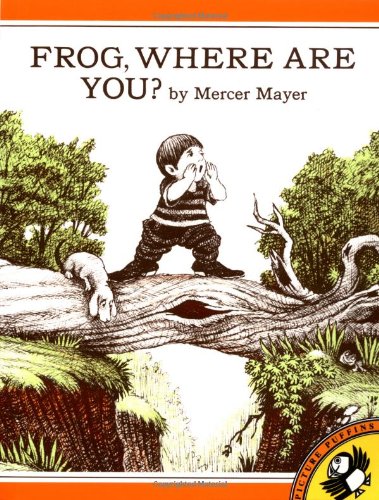
 Today I am writing on one of my favorite topics: how to use wordless picture books for narrative assessment and treatment purposes in speech language pathology. I love wordless picture books (or WLPBs as I refer to them) for a good reason and its not just due to their cute illustrations. WLPBs are so flexible that use can use them for both assessment and treatment of narratives. I personally prefer the Mercer Meyer series: ‘A Boy, a dog, a frog and a friend’ for sentimental reasons (they were the first WLPBs I used in grad school) but some of you may want to use a few others which is why I’ll be proving a few links containing lists of select picture books for you to choose from at the end of this post.

So how do I use them and with which age groups? Well, believe it or not you can start using them pretty early with toddlers and go all the way through upper elementary years. For myself, I found them to be most effective tools for children between 3-9 years of age. During comprehensive language assessments I use WLPBs in the following way. First I read a script based on the book. Depending on which WLPBs you use you can actually find select scripts online instead of creating your own. For example, if you choose to use the “Frog Series” by Mercer Meyer, the folks at SALT SOFTWARE already done the job for you and you can find those scripts HERE in both English and Spanish with audio to boot.
After I read/play the script, I ask the child to retell the story (a modified version of dynamic narrative assessment if you will) to see what their narrative is like. I am also looking to see whether the child is utilizing story telling techniques appropriate for his/her age.
For example, I expect a child between 3-4 years of age to be able to tell a story which contains 3 story grammar components (e.g., Initiating event, Attempt or Action, Consequences), minimally interpret/predict events during story telling, use some pronouns along with references to the characters names as well as discuss the character’s facial expressions, body postures & feelings (utilize early perspective taking) (Hedberg & Westby, 1993 ). By the time the child reaches 7 years of age, I expect him/her to be able to tell a story utilizing 5+ story grammar elements along with a clear ending, which indicates a resolution of the story’s problem, have a well developed plot, characters and a clear sequence of events, as well as keep consistent perspective which focuses around an incident in a story (Hedberg & Westby, 1993 ).

Therefore as children retell their stories based on the book I am keeping an eye on the following elements (as relevant to the child’s age of course):
Yes all of the above can be gleaned from a one wordless picture book!
If my assessment reveals that the child’s ability to engage in story telling is impaired for his/her age and I initiate treatment and still continue to use WLPBs in therapy. Depending on the child’s deficits I focus on remediating either elements of macrostructure (use-story organization and cohesion), microstructure (content + form including grammar syntax and vocabulary) or both.
Here are a few examples of story prompts I use in treatment with WLBPs:
Here are the questions related to Story Sequencing

As the child advances his/her skills I attempt to engage them in more complex book interactions
Wordless picture books are also terrific for teaching vocabulary of feelings and emotions
So this is how I use wordless picture books for the purposes of assessment and therapy. I’d love to know how you use them?
Before I sign off here are a few WDPBs links for you, hope you like them!
Start having fun with your wordless picture books today!
Helpful Smart Speech Therapy Resources:
 In my previous posts, I’ve shared my thoughts about picture books being an excellent source of materials for assessment and treatment purposes. They can serve as narrative elicitation aids for children of various ages and intellectual abilities, ranging from pre-K through fourth grade. They are also incredibly effective treatment aids for addressing a variety of speech, language, and literacy goals that extend far beyond narrative production. Continue reading Speech, Language, and Literacy Fun with Karma Wilson’s “Bear” Books
