Posted on 3 Comments

Teaching “Insight” to students with language, social communication, and executive functions impairments

One common difficulty our “higher functioning” (refers to subjective notion of ‘perceived’ functioning in school setting only) language impaired students with social communication and executive function difficulties present with – is lack of insight into own strengths and weaknesses.

Yet insight is a very important skill, which most typically developing students exhibit without consciously thinking about it. Having insight allows students to review work for errors, compensate for any perceived weaknesses effectively, and succeed with efficient juggling of academic workload.

In contrast, lack of insight in students with language deficits further compounds their difficulties, as they lack realization into own weaknesses and as a result are unable to effectively compensate for them.

That is why I started to explicitly teach the students on my caseload in both psychiatric hospital and private practice the concept of insight.

Now some of you may have some legitimate concerns. You may ask: “How can one teach such an abstract concept to students who are already impaired in their comprehension of language?” The answer to that is – I teach this concept through a series of concrete steps as well as through the introduction of abstract definitions, simplified for the purpose of my sessions into concrete terms.

Furthermore, it is important to understand that the acquisition of “insight” cannot be accomplished in one or even several sessions. Rather after this concept is introduced and the related vocabulary has been ‘internalized’ by the student,  thematic therapy sessions can be used to continue the acquisition of “insight” for months and even years to come.

"The Beginning" Road Sign with dramatic blue sky and clouds.

How do we begin? 

When I first started teaching this concept I used to explain the terminology related to “insight” verbally to students. However, as my own ‘insight’ developed in response to the students’ performance, I created a product to assist them with the acquisition of insight (See HERE).

Intended Audiences:

  • Clients with Language Impairments
  • Clients with Social Pragmatic Language Difficulties
  • Clients with Executive Function Difficulties
  • Clients with Psychiatric Impairments
    • ODD, ADHD, MD, Anxiety, Depression, etc.
  • Clients with Autism Spectrum Disorders
  • Clients with Nonverbal Learning Disability
  • Clients with Fetal Alcohol Spectrum Disorders
  • Adult and pediatric post-Traumatic Brain Injury (TBI) clients
  • Clients with right-side CVA Damage

kid-lightbulb-shutterstock_166297358-300×198

This thematic 10 page packet targets the development of “insight” in students with average IQ, 8+ years of age, presenting with social pragmatic and executive function difficulties.

The packet contains 1 page text explaining the concept of insight to students.

It also contains 11 Tier II vocabulary words relevant to the discussion of insight and their simplified definitions. The words were selected based on course curriculum standards for several grade levels (fourth through seventh) due to their wide usage in a variety of subjects (social studies, science, math, etc.)

Language activities in this packet include:

  • Explaining definitions
  • Answering open-ended comprehension questions
  • Sentence construction activity
  • Crossword puzzle
  • Two morphological awareness activities
    • Define prefixes and suffixes
    • Change word meanings by adding prefixes and suffixes to words
  • Self-reflection page in written format contains questions for students to assist them with judging their own strengths and weaknesses related to academic performance

And now a few words regarding the lesson structure

I introduce the concept of “insight” to clients by writing down the word and asking them to identify its parts: ‘in‘ and ‘sight‘. Depending on the student’s level of abilities I either get to the students to explain it to me or explain it myself that it is a compound word made up of two other words.

I then ask the students to interpret what the word could potentially mean. After I hear their responses I either confirm the correct one or end up explaining that this word refers to “looking into one’s brain” for answers related to how well someone understands information.

I have the students read the text located on the first page of my packet going over the concept of insight and some of its associated vocabulary words.  I ask the students to tell me the main idea of each paragraph as well as answer questions regarding supporting text details.

Once I am confident that the students have a fairly good grasp of the presented text I move on to the definitions page. There are actually two definition pages in the lesson: one at the beginning and one at the end of the packet. The first definitions page also contains word meaning and what parts of speech the definitions belong to.  The definition page at the end of the packet contains only the targeted words. It is now the students responsibility to write down the definition of all the vocabulary words and phrases in order for me to see how well they remember the meanings of pertinent words.

The packet also includes comprehension questions, a section on sentence construction several morphological awareness activities, a crossword puzzle and a self-reflection page.

The final activity in the packet requires the student to judge their own work performance during this activity.  I ask students questions such as:

  • How do you think you did on this task?
  • How do you know you did ________?
  • How can you prove to me you understood ________?

If a student responds “I know I did well because I understood everything”, I typically ask them to prove their comprehension to me, verbally. Here the goal is to have the student provide concrete verbal examples supporting their insight of their performance.

 This may include statements such as:

  • I know I did well because you said: “Nice Work!”
  • I know I did well because you didn’t correct me too much
  • I know I did well because you  kept smiling and showed me thumbs up as I was talking

As mentioned above this activity is only the beginning. After I ensure that the students have a decent grasp of this concept I continue working on it indirectly by having the students continuously judge their own performance on a variety of other therapy related activities and assignments.

You can find the complete packet on teaching “insight” in my online store (HERE).  Also, stay tuned for Part II of this series, which will describe how to continue solidifying the concept of “insight” in the context of therapy sessions for students with social pragmatic and executive function deficits.

Helpful Smart Speech Resources:


Posted on 1 Comment

In case you missed it: Therapy Fun with Ready Made Spring Related Bingo

Back in late February I did a guest post for Teach Speech 365. In case you missed it I am running it again on my blog since spring is now in full bloom!

Spring is here and there are many fun therapy activities you can do with your preschool and school aged clients during this time of year.  Now, while many of my colleagues are great at creating their own therapy materials, I am personally not that handy.  If you are like me, it’s perfectly okay since there are plenty of free materials that you can find online and adopt for your speech language purposes.

Making Friends, an online craft store, and Boggles World, an online ESL teacher resource, are two such websites, which have a number of ready-made materials, crafts, flashcards, and worksheets that can be adapted for speech language therapy purposes.  One of my personal favorites from both sites is bingo. I actually find it to be a pretty versatile activity, which can be used in a number of different ways in the speech room.

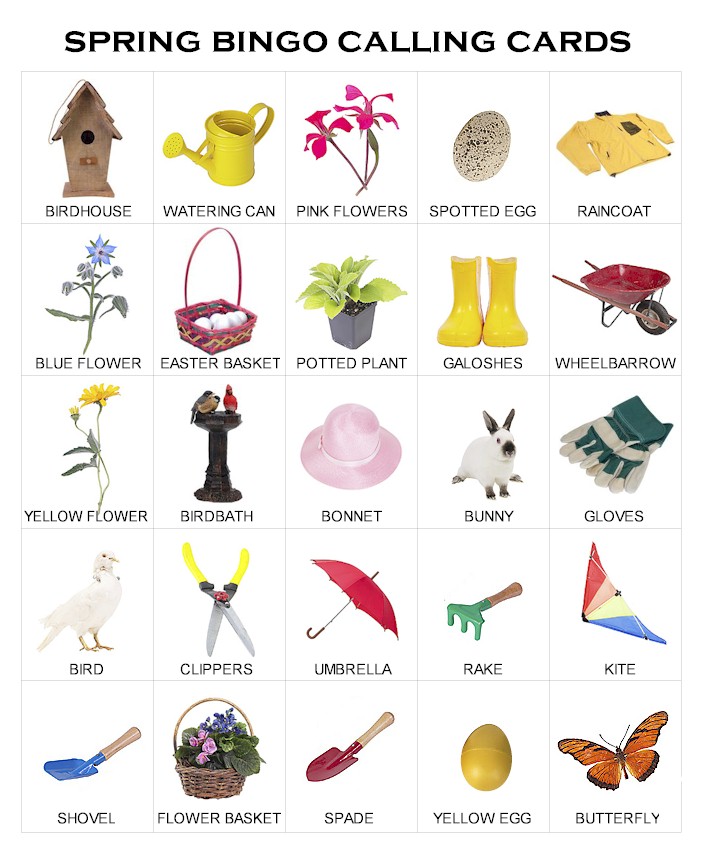
Let’s start with “Spring” bingo from the Making Friends Website, since its well suited for preschool aged children.  The game comes with both call-out cards and 12-4×4 card printable boards that can be printed out on card stock or just laminated. Continue reading In case you missed it: Therapy Fun with Ready Made Spring Related Bingo

Posted on 4 Comments

Understanding the extent of speech and language delays in older internationally adopted children: Implications for School Based Speech and Language Intervention.

Understanding the extent of speech and language delays in older internationally adopted children: Implications for School Based Speech and Language Intervention.

Tatyana Elleseff MA CCC-SLP


Note: This article was first published in October 2011 Issue of Adoption Today Magazine (pp. 32-35) http://www.adoptinfo.net/catalog_g111.html?catId=55347

 According to US State Department statistics, over 11,000 children were adopted internationally in the year 2010, with 2,803 of those children being school-aged (between 5-17 years old). Despite a staggering 50% decline in overall inter-country adoptions in the last 10 years, statistics on adoption of older children continue to remain steady (appropriately 3,000 older children were adopted each year, for the past decade). (Retrieved from http://adoption.state.gov/about_us/statistics.php Jul 29, 2011).

 Subsequent to the school aged child’s arrival to US, one of the first considerations that arises, secondary to health concerns and transitional adjustments, is the issue of schooling and appropriate school based services provision. In contrast to children adopted at younger ages, who typically have an opportunity to acquire some English language skills before an academic placement takes place, older international adoptees lack this luxury. Unfortunately, due to their unique linguistic status, many school districts are at a loss regarding best services options for these children.

 Despite the prevalence of available research on this subject, one myth that continues to persist is that older internationally adopted children are “bilingual” and as such should receive remedial services similar to those received by newly entering the country bilingual children (e.g., ESL classes).

 It is very important to understand that most internationally adopted children rapidly lose their birth language, sometimes in as little as several months post arrival (Gindis, 2005), since they are often adopted by parents who do not speak the child’s first language and as such are unable/unwilling to maintain it. Not only are these children not bilingual, they are also not ‘truly’ monolingual, since their first language is lost rather rapidly, while their second language has been gained minimally at the time of loss. Moreover, even during the transition period during which international adoptees are rapidly losing their native language, their birth language is still of no use to them, since it’s not functional in their monolingual, English speaking only, home and school environments. As a result of the above constraints, select researchers have referred to this pattern of language gain, as “second, first language acquisition” (e.g., Roberts, et al., 2005), since the child is acquiring his/her new language literally from scratch.

 This brings me to another myth, that given several years of immersion in a new language rich, home and school environments, most internationally adopted children with (mild) language delays will catch up to their non-adopted monolingual peers academically, without the benefit of any additional services.

 This concept requires clarification, since the majority of parents adopting older children, often have difficulty understanding the extent of their child’s speech and language abilities in their native language at the time of adoption, and the implications for new language transference.

 Research on speech language abilities of older internationally adopted children is still rather limited, despite available studies to date. Some studies (e.g., Glennen & Masters, 2002; Krakow & Roberts, 2003, etc) suggest that age of adoption is strongly correlated with language outcomes. In other words, older internationally adopted children are at risk of having poorer language outcomes than children adopted at younger ages. That is because the longer the child stays in an institutional environment the greater is the risk of a birth language delay. Children in institutional care frequently experience neglect, lack of language stimulation, lack of appropriate play experiences, lack of enriched community activities, as well as inadequate learning settings all of which have long lasting negative impact on their language development. It is also important to understand that language delays in birth language transfer and become language delays in a new language. These delays will typically continue to persist unless appropriate intervention, in the form of speech language services, is provided.

So what are the options available to parents adopting older school age children with respect to determination of their child’s speech and language abilities?

For starters, at the time of adoption, it is very important to gain as much information regarding their child’s birth language abilities (and academic abilities, when applicable) as possible. In many older children (3+ years of age), speech and language delays in birth language (e.g., sound and word mispronunciations, limited vocabulary, grammatical errors, inability to answer simple or abstract questions, short sentence length) can be easily determined based on orphanage staff interviews, observations, and/or review of documentation included in the adoption record. In the Russian Federation, for example, speech language pathologists are assigned to orphanages, so when working with older international adoptees from the Russian Federation, one often finds a short statement in adoption records stating that the child presented with a speech and language delay for which he was receiving services.

If possible, prior to adoption, parents may wish to explore the option of obtaining an independent comprehensive speech language evaluation of the child’s birth language abilities, while the child is still located in the birth country. The above may be significant for a number of reasons. Firstly, it will allow the parents to understand the extent of the child’s language delay in their birth tongue. Secondly, it will increase the parents’ chances of obtaining school based remediation services for their child once they arrive to US.

In the absence of qualified speech pathologists attached to the orphanage or conclusive interviews with medical professionals, paraprofessionals, and teachers (lack of availability, language barrier, time constraints, etc) regarding the child’s speech and language development, it will be very helpful for parents to videotape the child during speaking tasks. Most parents who request pre-adoption consultations are well familiar with videotaping, requested by various pre-adoption professionals (pediatricians, psychologists, etc) in order to review the child’s presenting appearance, fine and gross motor skills, behavior and social skills as well as other areas of functioning. Language video samples should focus on child’s engagement in literacy tasks such as reading a book aloud (if sufficiently literate), and on speaking activities such as telling a story, recalling an episode from daily life or a conversation with familiar person. In the absence of all other data, these samples can later be analyzed and interpreted in order to determine if speech language deficits are present. (Glennen, 2009)

Parents need to understand that internationally adopted children can often be denied special education services in the absence of appropriate documentation. Such denials are often based on misinterpretation of the current IDEA 2004 law. Some denials may be based on the fact that once these children arrive to US, it is very difficult to find a qualified speech language pathologist who can assess the child in their birth language, especially if it’s a less commonly spoken language such as Amharic, Kazakh, or Ukrainian. Additionally, schools may refuse to test internationally adopted children for several years post arrival, on the grounds that these children have yet to attain “adequate language abilities in English” and as such, the testing results will be biased/inadequate, since testing was not standardized on children with similar linguistic abilities. Furthermore, even if the school administers appropriate testing protocols and finds the child’s abilities impaired, testing results may still be dismissed as inaccurate due to the child’s perceived limited English exposure.

Contrastingly, a speech and language report in the child’s birth language will outline the nature and severity of disorder, and state that given the extent of the child’s deficits in his/her birth language, similar pattern will be experienced in English unless intervention is provided. According to one of the leading speech-language researchers, Sharon Glennen, “Any child with a known history of speech and language delays in the sending country should be considered to have true delays or disorders and should receive speech and language services after adoption.” (Glennen, 2009, p.52)

To continue, some options in locating a speech pathologist in the child’s birth country include consulting with the adoption agency or the local pediatrician, who is providing medical clearance for the child. However, it is very important that the speech language pathologist be licensed and reputable, as unqualified professionals will not be able to make appropriate diagnostic interpretations and suggestions, and may provide erroneous information to the parent.

If the parents are unable to obtain the relevant report in the child’s birth country, the next viable option is to obtain a comprehensive speech language assessment upon arrival to US, from a qualified professional who is well versed in both: the child’s native language as well as speech and language issues unique to assessment of internationally adopted children. Please note that the window of opportunity to assess the school age child in his/her native language is very narrow, as birth language attrition occurs within literally a matter of several months post adoption and is more rapid in children with delayed and disordered speech and language abilities (Gindis, 1999, 2005, 2008).

If the presence of a speech language delay has been confirmed (e.g., documented in adoption paperwork, interpreted through video samples, supported by a psycho-educational assessment, etc) the next step is to request the relevant speech language services for your child through the school system. Typically school administration will ask you to produce such a request in writing. One such letter template is available through the Post Adoption Learning Center (see link below). This template, complete with relevant references, can be modified to each child’s unique circumstances, and submitted along with supporting paperwork (e.g., speech-language, psycho-educational reports) and available video samples. In cases of services denials, an educational attorney specializing in educational policy relevant to international adoptions may need be consulted.

Once the child is qualified for appropriate speech language services in the school system it is also important to understand that language acquisition occurs in a progression, with social language (CLF) preceding cognitive language (CLM) (Gindis, 1999). Communicative Language Fluency (CLF) is language used in social situations for day-to-day social interactions. These skills are used to interact at home, on the playground, in the lunch room, on the school bus, at parties, playing sports and talking on the telephone. Social interactions are usually context embedded. Because they occur in meaningful social contexts they are typically not very demanding cognitively and the language required is not specialized. These language skills usually emerge in internationally adopted children as early as several months post adoption. Once these abilities emerge and solidify it is very important for speech language pathologists not to dismiss the child from services but to continue the treatment and focus it in the realm of cognitive/ academic language.

Cognitive Language Mastery (CLM) refers to language needed for formal academic learning. This includes listening, speaking, reading, and writing about subject area content material including analyzing, synthesizing, judging and evaluating presented information. This level of language learning is essential for a child to succeed in school. Language impaired children adopted at older ages need time and support to become develop cognitive language and become proficient in academic areas, an ability which usually takes a number of years to refine. Before discharging the child from therapy services it is very important that their cognitive/academic language abilities are assessed and are found within average limits.

Understanding the extent of speech language delay in internationally adopted older children AND factors pertaining to appropriate remediation are crucial for delivery of relevant (and meaningful to the child) speech language services as well as ensuring their continued academic success in school setting.

References:

• Gindis, B. (1999) Language-Related Issues for International Adoptees and Adoptive Families. In: T. Tepper, L. Hannon, D. Sandstrom, Eds. “International Adoption: Challenges and Opportunities.” PNPIC, Meadow Lands , PA. , pp. 98-108

• Gindis, B. (2005). Cognitive, language, and educational issues of children adopted from overseas orphanages. Journal of Cognitive Education and Psychology, 4 (3): 290-315.

• Gindis (2008) Abrupt Native Language Loss in International Adoptees Advance for Speech/Language Pathologists and Audiologists Dec 22.

• Glennen, S. & Masters, G. (2002). Typical and atypical language development in infants and toddlers adopted from Eastern Europe. American Journal of Speech-LanguagePathology, 44, 417-433

• Glennen, S., & Bright, B. J. (2005). Five years later: Language in school-age internationally adopted children. Seminars in Speech and Language, 26, 86-101.

• .Glennen, S (2009) Speech and Language Guidelines for Children Adopted from Abroad at Older Ages. Topics in language Disorders 29, 50-64.

• Intercountry Adoption Bureau of Consular Affairs US Department of State Retrieved on Jul 29, 2011 from http://adoption.state.gov/about_us/statistics.php

• Krakow, R. A., & Roberts, J. (2003). Acquisitions of English vocabulary by young Chinese adoptees. Journal of Multilingual Communication Disorders, 1, 169-176.

• Muchnik, M. How to request speech/language services for your child. Retrieved on Aug 2, 2011 from http://www.bgcenterschool.org/FreePresentations/P8-Speech-language-support.shtml

• Roberts, et al, (2005). Language development in preschool-aged children adopted from China. Journal of Speech, Language and Hearing Research, 48, 93-107.

Bio: Tatyana Elleseff MA CCC-SLP is a bilingual speech language pathologist with a full-time affiliation with University of Medicine and Dentistry of New Jersey and a private practice in Somerset, NJ. She received her Master’s Degree from New York University and her Bilingual Extension Certification from Columbia University. Currently she is licensed by the states of New Jersey and New York and holds a Certificate of Clinical Competence from American Speech Language and Hearing Association. She specializes in working with bilingual, multicultural, internationally and domestically adopted at risk children with complex medical, developmental, neurogenic, psychogenic, and acquired communication disorders. For more information about her services call 917-916-7487 or visit her website: www.smartspeechtherapy.com

Cite as: Elleseff, Tatyana (2011, October) Understanding the extent of speech and language delays in older internationally adopted children: Implications for School Based Speech and Language Intervention. Adoption Today.

Posted on 5 Comments

Birthday Giveaway Day Eighteen: Grocery Theractivity

It’s DAY 18 of my Birthday Month Giveaways and I am raffling off a giveaway by Speech2U, which is a Grocery Theractivity.  This is an awesome 48 page packet which contains 72 different food pictures and 9 different activities. It can be used with ages ranging from preschoolers through middle school and is great for goals targeting life skills.

Packet Activities:

  • Dramatic play centers
  • Inferencing
  • Categorization
  • What does not belong
  • Healthy Eating

Additional Contents:

  • Healthy Eating resource list
  • Food Plate teaching Sheets
  • Food plate mat
  • Illustrated food pictures in 2 different sizes
  • Grocery lists for Categorization and Inferencing
  • Signs for Dramatic Play Centers

You can find this product in  Speech2U TPT store by clicking HERE or you can enter my giveaway for a chance to win.
a Rafflecopter giveaway

Posted on 3 Comments

Improving Emotional Intelligence of Children with Social Communication Disorders

Our ability to recognize our own and other people’s emotions, distinguish between and correctly identify different feelings, as well as use that information to guide our thinking and behavior is called Emotional Intelligence (EI) (Salovey, et al, 2008).

EI encompasses dual areas of: emotion understanding, which is an awareness and comprehension of one’s and others emotions (Harris, 2008) and emotion regulation, which are internal and external strategies people use to regulate emotions (Thompson, 1994).

Many students with social communication challenges experience problems with all aspects of EI, including the perception, comprehension, and regulation of emotions (Brinton & Fujiki, 2012).

A number of recent studies have found that children with language impairments also present with impaired emotional intelligence including impaired perception of facial expressions (Spackman, Fujiki, Brinton, Nelson, & Allen, 2005), prosodic emotions (Fujiki, Spackman, Brinton, & Illig, 2008) as well as abstract emotion comprehension (Ford & Milosky, 2003).

Children with impaired emotional intelligence will experience numerous difficulties during social interactions due to their difficulty interpreting emotional cues of others (Cloward, 2012).  These may include but not be limited to active participation in cooperative activities, as well as full/competent interactions during group tasks (Brinton, Fujiki, & Powell, 1997)

Many students with social pragmatic deficits and language impairments are taught to recognize emotional states as part of their therapy goals. However, the provided experience frequently does not go beyond the recognition of the requisite “happy”, “mad”, “sad” emotions. At times, I even see written blurbs from others therapists, which state that “the student has mastered the goals of emotion recognition”.  However, when probed further it appears that the student had merely mastered the basic spectrum of simple emotional states, which places the student at a distinct disadvantage  as compared to typically developing peers who are capable of recognition and awareness of a myriad of complex emotional states.

03well_eyes-tmagArticle

That is why I developed a product to target abstract emotional states comprehension in children with language impairments and social communication disorders. “Gauging Moods and Interpreting Abstract Emotional States: A Perspective Taking Activity Packet” is a social pragmatic photo/question set,  intended for children 7+ years of age, who present with difficulty recognizing abstract emotional states of others (beyond the “happy, mad, sad” option) as well as appropriately gauging their moods.

Many sets contain additional short stories with questions that focus on making inferencing, critical thinking as well as interpersonal negotiation skills.  Select sets require the students to create their own stories with a focus on the reasons why the person in the photograph might be feeling what s/he are feeling.

There are on average 12-15 questions per each photo.  Each page contains a photograph of a person feeling a particular emotion. After the student is presented with the photograph, they are asked a number of questions pertaining to the recognition of the person’s emotions, mood, the reason behind the emotion they are experiencing as well as what they could be potentially thinking at the moment.  Students are also asked to act out the depicted emotion they use of mirror.

Activities also include naming or finding (in a thesaurus or online) the synonyms and antonyms of a particular word in order to increase students’ vocabulary knowledge. A comprehensive two page “emotions word bank” is included in the last two pages of the packet to assist the students with the synonym/antonym selection, in the absence of a thesaurus or online access.

Students are also asked to use a target word in a complex sentence containing an adverbial (pre-chosen for them) as well as to identify a particular word or phrase associated with the photo or the described story situation.

Since many students with social pragmatic language deficits present with difficulty determining a person’s age (and prefer to relate to either younger or older individuals who are perceived to be “less judgmental of their difficulties”), this concept is also explicitly targeted in the packet.

This activity is suitable for both individual therapy sessions as well as group work.  In addition to its social pragmatic component is also intended to increase vocabulary knowledge and use as well as sentence length of children with language impairments.

Intended Audiences:

  • Clients with Language Impairments
  • Clients with Social Pragmatic Language Difficulties
  • Clients with Executive Function Difficulties
  • Clients with Psychiatric Impairments
    • ODD, ADHD, MD, Anxiety, Depression, etc.
  • Clients with Autism Spectrum Disorders
  • Clients with Nonverbal Learning Disability
  • Clients with Fetal Alcohol Spectrum Disorders
  • Adult and pediatric post-Traumatic Brain Injury (TBI) clients
  • Clients with right-side CVA Damage

Areas covered in this packet:

  1. Gauging Age (based on visual support and pre-existing knowledge)
  2. Gauging Moods (based on visual clues and context)
  3. Explaining Facial Expressions
  4. Making Social Predictions and Inferences (re: people’s emotions)
  5. Assuming First Person Perspectives
  6. Understanding Sympathy
  7. Vocabulary Knowledge and Use (pertaining to the concept of Emotional Intelligence)
  8. Semantic Flexibility (production of synonyms and antonyms)
  9. Complex Sentence Production
  10. Expression of Emotional Reactions
  11. Problem Solving Social Situations
  12. Friendship Management and Peer Relatedness

This activity is suitable for both individual therapy sessions as well as group work.  In addition to its social pragmatic component is also intended to increase vocabulary knowledge and use as well as sentence length of children with language impairments. You can find it in my online store (HERE).

Helpful Smart Speech Resources:

References:

  1. Brinton, B., Fujiki, M., & Powell, J. M. (1997). The ability of children with language impairment to manipulate topic in a structured task. Language, Speech and Hearing Services in Schools, 28, 3-11.
  2. Brinton B., & Fujiki, M. (2012). Social and affective factors in children with language impairment. Implications for literacy learning. In C. A. Stone, E. R. Silliman, B. J. Ehren, & K. Apel (Eds.), Handbook of language and literacy: Development and disorders (2nd Ed.). New York, NY: Guilford.
  3. Cloward, R. (2012). The milk jug project: Expression of emotion in children with language impairment and autism spectrum disorder (Unpublished honor’s thesis). Brigham Young University, Provo, Utah.
  4. Ford, J., & Milosky, L. (2003). Inferring emotional reactions in social situations: Differences in children with language impairment. Journal of Speech, Language, and Hearing Research, 46(1), 21-30.
  5. Fujiki, M., Spackman, M. P., Brinton, B., & Illig, T. (2008). Ability of children with language impairment to understand emotion conveyed by prosody in a narrative passage. International Journal of Language & Communication Disorders, 43(3), 330-345
  6. Harris, P. L. (2008). Children’s understanding of emotion. In M. Lewis, J. M. Haviland-Jones, & L. Feldman Barrett, (Eds.), Handbook of emotions (3rd ed., pp. 320–331). New York, NY: Guilford Press.
  7. Salovey, P., Detweiler-Bedell, B. T., Detweiler-Bedell, J. B., & Mayer, J. D. (2008). Emotional intelligence. In M. Lewis, J. M. Haviland-Jones, & L. Feldman Barrett (Eds.), Handbook of Emotions (3rd ed., pp. 533-547). New York, NY: Guilford Press.
  8. Spackman, M. P., Fujiki, M., Brinton, B., Nelson, D., & Allen, J. (2005). The ability of children with language impairment to recognize emotion conveyed by facial expression and music. Communication Disorders Quarterly, 26(3), 131-143.
  9. Thompson, R. (1994). Emotion regulation: A theme in search of definition. Monographs of the Society for Research in Child Development, 59(2-3), 25-52

a Rafflecopter giveaway

Posted on 5 Comments

Deconstructing Auditory Processing Disorder (APD) for Parents and Professionals: Informational Handout

The diagnosis of auditory processing disorder (APD) has long been steeped in significant controversy. I have been writing about the serious issues surrounding it for a number of years. Today I am expanding upon the posts I wrote in the past on this subject by adding a link to a handout for parents and professionals succinctly summarizing the current controversies relevant to APD in a 2-page handout. You can download it from my online store for FREE, HERE

What are some key takeaway points from that handout?

Auditory Processing Disorder (APD) is a condition that is often characterized by difficulty processing orally presented information. Reported symptoms include but are not limited to, the increased processing time to respond to questions, requests for frequent repetition of information, difficulty following directions and attending to speech, difficulty keeping up with class discussions, difficulty listening in noisy environments, difficulty maintaining attention on presented tasks,  difficulty remembering instructions and directions or verbally presented information, as well as poor/weak phonemic awareness, reading, spelling, and writing abilities affecting the student’s social and academic performance. Frequent recommendations for the above difficulties include referral to an audiologist once the student is typically 6-7 years of age in order to undergo auditory processing testing.

Continue reading Deconstructing Auditory Processing Disorder (APD) for Parents and Professionals: Informational Handout
Posted on 7 Comments

Early Intervention Evaluations PART I: Assessing 2.5 year olds

Today, I’d  like to talk about speech and language assessments of children under three years of age.  Namely, the quality of these assessments.   Let me be frank,  I  am not happy with what I am seeing.  Often times,  when I receive a speech-language report on a child under three years of age,  I am struck by how little functional information it contains about the child’s  linguistic strengths and weaknesses.  Indeed,  conversations with parents often reveal that at best the examiner spent no more than half an hour or so playing with the child and performed very limited functional testing of their actual abilities.   Instead, they interviewed the parent and based their report on parental feedback alone.   Consequently, parents often end up with a report of very limited value,  which does not contain any helpful information on how delayed is the child as compared to peers their age.

So today I like to talk about what information should such speech-language reports should contain.   For the purpose of this particular post,  I will choose a particular developmental age at which children at risk of language delay are often assessed by speech-language pathologists. Below you will find what information I typically like to include in these reports as well as developmental milestones for children 30 months or 2.5 years of age.

Why 30 months, you may ask?   Well, there isn’t really any hard science to it. It’s just that I noticed that a significant percentage of parents who were already worried about their children’s speech-language abilities when they were younger, begin to act upon those worries as the child is nearing 3 years of age and their abilities are not improving or are not commensurate with other peers their age.

So here is the information I include in such reports (after I’ve gathered pertinent background information in the form of relevant intakes and questionnaires, of course).  Naturally, detailed BACKGROUND HISTORY section is a must! Prenatal, perinatal, and postnatal development should be prominently featured there.   All pertinent medical history needs to get documented as well as all of the child’s developmental milestones in the areas of cognition,  emotional development, fine and gross motor function, and of course speech and language.  Here,  I also include a family history of red flags: international or domestic adoption of the child (if relevant) as well as familial speech and language difficulties, intellectual impairment, psychiatric disorders, special education placements, or documented deficits in the areas of literacy (e.g., reading, writing, and spelling). After all, if any of the above issues are present in isolation or in combination, the risk for language and literacy deficits increases exponentially, and services are strongly merited for the child in question.

For bilingual children,  the next section will cover LANGUAGE BACKGROUND AND USE.  Here, I describe how many and which languages are spoken in the home and how well does the child understand and speak any or all of these languages (as per parental report based on questionnaires).

After that,  I  move on to describe the child’s ADAPTIVE BEHAVIOR during the assessment.  In this section, I cover emotional relatedness, joint attention, social referencing,  attention skills, communicative frequency, communicative intent,  communicative functions, as well as any and all unusual behaviors noted during the therapy session (e.g., refusal, tantrums, perseverations, echolalia, etc.) Then I move on to PLAY SKILLS. For the purpose of play assessment, I use the Revised Westby Play Scale (Westby, 2000). In this section,  I describe where the child is presently with respect to play skills,  and where they actually need to be developmentally (excerpt below).

During today’s assessment, LS’s play skills were judged to be significantly reduced for his age. A child of LS’s age (30 months) is expected to engage in a number of isolated pretend play activities with realistic props to represent daily experiences (playing house) as well as less frequently experienced events (e.g., reenacting a doctor’s visit, etc.) (corresponds to Stage VI on the Westby Play Scale, Revised Westby Play Scale (Westby, 2000)). Contrastingly, LS presented with limited repertoire routines, which were characterized primarily by exploration of toys, such as operating simple cause and effect toys (given modeling) or taking out and then putting back in playhouse toys.  LS’s parents confirmed that the above play schemas were representative of play interactions at home as well. Today’s LS’s play skills were judged to be approximately at Stage II (13 – 17 months) on the Westby Play Scale, (Revised Westby Play Scale (Westby, 2000)) which is significantly reduced for a child of  LS’s age, since it is almost approximately ±15 months behind his peers. Thus, based on today’s play assessment, LS’s play skills require therapeutic intervention. “

Sections on AUDITORY FUNCTION, PERIPHERAL ORAL MOTOR EXAM, VOCAL PARAMETERS, FLUENCY AND RESONANCE (and if pertinent FEEDING and SWALLOWING follow) (more on that in another post).

Now, it’s finally time to get to the ‘meat and potatoes’ of the report ARTICULATION AND PHONOLOGY as well as RECEPTIVE and EXPRESSIVE LANGUAGE (more on PRAGMATIC ASSESSMENT in another post).

First, here’s what I include in the ARTICULATION AND PHONOLOGY section of the report.

  1. Phonetic inventory: all the sounds the child is currently producing including (short excerpt below):
    • Consonants:  plosive (/p/, /b/, /m/), alveolar (/t/, /d/), velar (/k/, /g/), glide (/w/), nasal (/n/, /m/) glottal (/h/)
    • Vowels and diphthongs: ( /a/, /e/, /i/, /o/, /u/, /ou/, /ai/)
  2. Phonotactic repertoire: What type of words comprised of how many syllables and which consonant-vowel variations the child is producing (excerpt below)
    • LS primarily produced one syllable words consisting of CV (e.g., ke, di), CVC (e.g., boom), VCV (e.g., apo) syllable shapes, which is reduced for a child his age. 
  3. Speech intelligibility in known and unknown contexts
  4. Phonological processes analysis

Now that I have described what the child is capable of speech-wise,  I discuss where the child needs to be developmentally:

“A child of LS’s age (30 months) is expected to produce additional consonants in initial word position (k, l, s, h), some consonants (t, d, m, n, s, z) in final word position (Watson & Scukanec, 1997b), several consonant clusters (pw, bw, -nd, -ts) (Stoel-Gammon, 1987) as well as evidence a more sophisticated syllable shape structure (e.g., CVCVC)   Furthermore, a 30 month old child is expected to begin monitoring and repairing own utterances, adjusting speech to different listeners, as well as practicing sounds, words, and early sentences (Clark, adapted by Owens, 1996, p. 386) all of which LS is not performing at this time.  Based on above developmental norms, LS’s phonological abilities are judged to be significantly below age-expectancy at this time. Therapy is recommended in order to improve LS’s phonological skills.”

At this point, I am ready to move on to the language portion of the assessment.   Here it is important to note that a number of assessments for toddlers under 3 years of age contain numerous limitations. Some such as REEL-3 or Rosetti (a criterion-referenced vs. normed-referenced instrument) are observational or limitedly interactive in nature, while others such as PLS-5,  have a tendency to over inflate scores,  resulting in a significant number of children not qualifying for rightfully deserved speech-language therapy services.  This is exactly why it’s so important that SLPs have a firm knowledge of developmental milestones!  After all,  after they finish describing what the child is capable of,  they then need to describe what the developmental expectations are for a child this age (excerpts below).

RECEPTIVE LANGUAGE

LS’s receptive language abilities were judged to be scattered between 11-17 months of age (as per clinical observations as well as informal PLS-5 and REEL-3 findings), which is also consistent with his play skills abilities (see above).  During the assessment LS was able to appropriately understand prohibitive verbalizations (e.g., “No”, “Stop”), follow simple 1 part directions (when repeated and combined with gestures), selectively attend to speaker when his name was spoken (behavioral), perform a routine activity upon request (when combined with gestures), retrieve familiar objects from nearby (when provided with gestures), identify several major body parts (with prompting) on a doll only, select a familiar object when named given repeated prompting, point to pictures of familiar objects in books when named by adult, as well as respond to yes/no questions by using head shakes and head nods. This is significantly below age-expectancy.

A typically developing child 30 months of age is expected to spontaneously follow (without gestures, cues or prompts) 2+ step directives, follow select commands that require getting objects out of sight, answer simple “wh” questions (what, where, who), understand select spatial concepts, (in, off, out of, etc), understand select pronouns (e.g., me, my, your), identify action words in pictures, understand concept sizes (‘big’, ‘little’), identify simple objects according to their function, identify select clothing items such as shoes, shirt, pants, hat (on self or caregiver) as well as understand names of farm animals, everyday foods, and toys. Therapeutic intervention is recommended in order to increase LS’s receptive language abilities.

EXPRESSIVE LANGUAGE:

During today’s assessment, LS’s expressive language skills were judged to be scattered between 10-15 months of age (as per clinical observations as well as informal PLS-5 and REEL-3 findings). LS was observed to communicate primarily via proto-imperative gestures (requesting and object via eye gaze, reaching) as well as proto-declarative gestures (showing an object via eye gaze, reaching, and pointing). Additionally, LS communicated via vocalizations, head nods, and head shakes.  According to parental report, at this time LS’s speaking vocabulary consists of approximately 15-20 words (see word lists below).  During the assessment LS was observed to spontaneously produce a number of these words when looking at a picture book, playing with toys, and participating in action based play activities with Mrs. S and clinician.  LS was also observed to produce a number of animal sounds when looking at select picture books and puzzles.  For therapy planning purposes, it is important to note that LS was observed to imitate more sounds and words, when they were supported by action based play activities (when words and sounds were accompanied by a movement initiated by clinician and then imitated by LS). Today LS was observed to primarily communicate via a very limited number of imitated and spontaneous one word utterances that labeled basic objects and pictures in his environment, which is significantly reduced for his age.

A typically developing child of LS’s chronological age (30 months) is expected to possess a minimum vocabulary of 200+ words (Rescorla, 1989), produce 2-4 word utterance combinations (e.g., noun + verb, verb + noun + location, verb + noun + adjective, etc), in addition to asking 2-3 word questions as well as maintaining a topic for 2+ conversational turns. Therapeutic intervention is recommended in order to increase LS’s expressive language abilities.”

Here you have a few speech-language evaluation excerpts which describe not just what the child is capable of but where the child needs to be developmentally.   Now it’s just a matter of summarizing my IMPRESSIONS (child’s strengths and needs), RECOMMENDATIONS as well as SUGGESTED (long and short term) THERAPY GOALS.  Now the parents have some understanding regarding their child’s  strengths and needs.   From here,  they can also track their child’s progress in therapy as they now have some idea to what it can be compared to.

Now I know that many of you will tell me,  that this is a ‘perfect world’ evaluation conducted by a private therapist with an unlimited amount of time on her hands.   And to some extent, many of you will be right! Yes,  such an evaluation was a result of more than 30 minutes spent face-to-face with the child.  All in all, it took probably closer to 90 minutes of face to face time to complete it and a few hours to write.   And yes,  this is a luxury only a few possess and many therapists in the early intervention system lack.  But in the long run, such evaluations pay dividends not only, obviously, to your clients but to SLPs who perform them.  They enhance and grow your reputation as an evaluating therapist. They even make sense from a business perspective.  If you are well-known and highly sought after due to your evaluating expertise, you can expect to be compensated for your time, accordingly. This means that if you decide that your time and expertise are worth private pay only (due to poor insurance reimbursement or low EI rates), you can be sure that parents will learn to appreciate your thoroughness and will choose you over other providers.

So, how about it? Can you give it a try? Trust me, it’s worth it!

Selected References:

  • Owens, R. E. (1996). Language development: An introduction (4th ed.). Boston, MA: Allyn & Bacon.
  • Rescorla, L. (1989). The Language Development Survey: A screening tool for delayed language in toddlers. Journal of Speech and Hearing Disorders, 54, 587–599.
  • Selby, J. C., Robb, M. P., & Gilbert, H. R. (2000). Normal vowel articulations between 15 and 36 months of age. Clinical Linguistics and Phonetics, 14, 255-266.
  • Stoel-Gammon, C. (1987). Phonological skills of 2-year-olds. Language, Speech, and Hearing Services in Schools, 18, 323-329.
  • Watson, M. M., & Scukanec, G. P. (1997b). Profiling the phonological abilities of 2-year-olds: A longitudinal investigation. Child Language Teaching and Therapy, 13, 3-14.

For more information on EI Assessments click on any of the below posts:

Posted on 2 Comments

Designing RTI-Based Vocabulary Interventions

Image result for rti vocabulary interventions

Smart Speech Therapy LLC is celebrating #BHSM2015  ASHA Better Hearing and Speech Month. So without further ado, below you will find my recommendations for designing effective vocabulary interventions for struggling students.

This past academic year  I have been delivering vocabulary intervention once a week for an hour in my setting to 5 different classrooms of low achieving students.   This allowed me to research quite a bit regarding the principles of vocabulary teaching as well as  gave me an opportunity to adapt and design my own vocabulary intervention materials.

Vocabulary is of course one of the integral components of reading comprehension  along with phonological awareness, phonics, and reading fluency. Knowledge of vocabulary is especially important for navigation of informational texts.

Who can benefit from explicit vocabulary instruction?

The answer is simple: any child with decreased vocabulary skills!  This may include but not be limited to:

  • Children from low socioeconomic backgrounds
  • Children with Limited English Proficiency
  • Children  with language impairments and learning disabilities

How can we design effective vocabulary interventions?

According to Judy Montgomery “You can never select the wrong words to teach.” Beck et al (2002)  recommends teaching Tier II words, as they would make the most significant impact on a child’s spoken and written expressive capabilities, and are useful across a variety of settings.

 Tips on creating intervention materials:

  • Make vocabulary  words thematic and center them  around current events
  • Select a topic students are learning about in the classroom or center it around a seasonal event/holiday
  • Select no more than 10 words per packet and work on the packet for a period of several weeks to engage in a frequent mass practice
  • Attempt to select vocabulary words used across several domains, which are still applicable to the student’s academic experience

 Packet Layout : 

 1.  Embed the selected vocabulary words in a short thematic text

2.  Create a definitions page with usage tips to assist students with comprehension of vocabulary definitions

3. Have  the students practice  using these vocabulary words  in various activities  such as fill-in the blank, matching,  sentence creation, etc.

water_cycle_diagram

This thematic packet, which can be used all year round, was created to target listening and reading comprehension of older students diagnosed with language impairments and learning disabilities.

The packet contains the following items:

  1. 4 Paragraph Reading Comprehension Passage about the Hyrologic (Water) Cycle
  2. 7  Open ended comprehension questions
  3. 12 Response to Intervention (RTI) Tier 2 vocabulary words in story context
  4. 10 Synonyms and antonyms matching words
  5. 15 Fill-in the blank words to complete sentences
  6.  Open ended sentence formulation utilizing 10 story vocabulary words

You can grab it HERE in my online store. 

Helpful Smart Speech Resources: