 Three years ago I wrote a blog post entitled: “Special Education Disputes and Comprehensive Language Testing: What Parents, Attorneys, and Advocates Need to Know“. In it, I used 4 very different scenarios to illustrate the importance of comprehensive language evaluations for children with subtle language and learning needs. Today I would like to expound more on that post in order to explain, what actually constitutes a good independent comprehensive assessment. Continue reading What Makes an Independent Speech-Language-Literacy Evaluation a GOOD Evaluation?
Search Results for: auditory processing/page/2/—http:/www.smartspeechtherapy.com/shop/creating-a-functional-therapy-plan-therapy-goals-soap-note-documentation/�http:/www.smartspeechtherapy.com/shop/creating-a-functional-therapy-plan-therapy-goals-soap-note-documentation
Deconstructing Auditory Processing Disorder (APD) for Parents and Professionals

What Should be Driving Our Treatment?
 Today I want to talk treatment. That thing that we need to plan for as we are doing our assessments. But are we starting our treatments the right way? The answer may surprise you. I often see SLPs phrasing questions regarding treatment the following way: “I have a student diagnosed with ____ (insert disorder here). What is everyone using (program/app/materials) during therapy sessions to address ___ diagnosis?”
Of course, the answer is never that simple. Just because a child has a diagnosis of a social communication disorder, word-finding deficits, or a reading disability does not automatically indicate to the treating clinician, which ‘cookie cutter’ materials and programs are best suited for the child in question. Only a profile of strengths and needs based on a comprehensive language and literacy testing can address this in an adequate and targeted manner.
To illustrate, reading intervention is a much debated and controversial topic nowadays. Everywhere you turn there’s a barrage of advice for clinicians and parents regarding which program/approach to use. Barton, Wilson, OG… the well-intentioned advice just keeps on coming. The problem is that without knowing the child’s specific deficit areas, the application of the above approaches is quite frankly … pointless.
 There could be endless variations of how deficits manifest in poor readers. Is it aspects of phonological awareness, phonics, morphology, etc. What combination of deficits is preventing the child from becoming a good reader?
Let’s a take a look at an example, below. It’s the CTOPP-2 results of a 7-6-year-old female with a documented history of extensive reading difficulties and a significant family history of reading disabilities in the family.
Results of the Comprehensive Test of Phonological Processing-2 (CTOPP-2)
| Subtests | Scaled Scores | Percentile Ranks | Description |
| Elision (EL) | 7 | 16 | Below Average |
| Blending Words (BW) | 13 | 84 | Above Average |
| Phoneme Isolation (PI) | 6 | 9 | Below Average |
| Memory for Digits (MD) | 8 | 25 | Average |
| Nonword Repetition (NR) | 8 | 25 | Average |
| Rapid Digit Naming (RD) | 10 | 50 | Average |
| Rapid Letter Naming (RL) | 11 | 63 | Average |
| Blending Nonwords (BN) | 8 | 25 | Average |
| Segmenting Nonwords (SN) | 8 | 25 | Average |
However, the results of her CTOPP-2 testing clearly indicate that phonological awareness, despite two areas of mild weaknesses, is not really a significant problem for this child. So let’s look at the student’s reading fluency results.
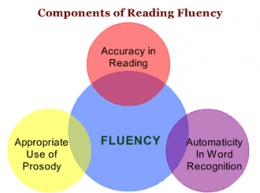 Reading Fluency: “LG’s reading fluency during this task was judged to be significantly affected by excessive speed, inappropriate pausing, word misreadings, choppy prosody, as well as inefficient word attack skills. While she was able to limitedly utilize the phonetic spelling of unfamiliar words (e.g., __) provided to her in parenthesis next to the word (which she initially misread as ‘__’), she exhibited limited use of metalinguistic strategies (e.g., pre-scanning sentences to aid text comprehension, self-correcting to ensure that the read words made sense in the context of the sentence, etc.), when reading the provided passage. To illustrate, during the reading of the text, LG was observed to frequently (at least 3 times) lose her place and skip entire lines of text without any attempts at self-correction. At times she was observed to read the same word a number of different ways (e.g., read ‘soup’ as ‘soup’ then as ‘soap’, ‘roots’ as ‘roofs’ then as ‘roots’, etc.) without attempting to self-correct. LG’s oral reading rate was also observed to be impaired for her age/grade levels. Her prosody was significantly adversely affected due to lack of adequate pausing for punctuation marks (e.g., periods, commas, etc.). Instead, she paused during text reading only when he could not decode select words in the text. Though, LG was able to read 70 words per minute, which was judged to be grossly commensurate with grade-level, out of these 70 words she skipped 2 entire lines of text, invented an entire line of text, as well as made 4 decoding errors and 6 inappropriate pauses.”
So now we know that despite quite decent phonological awareness abilities, this student presents with quite poor sound-letter correspondence skills and will definitely benefit from explicit phonics instruction addressing the above deficit areas. But that is only the beginning! By looking at the analysis of specific misreadings we next need to determine what other literacy areas need to be addressed. For the sake of brevity, I can specify that further analysis of this child reading abilities revealed that reading comprehension, orthographic knowledge, as well as morphological awareness were definitely areas that also required targeted remediation. The assessment also revealed that the child presented with poor spelling and writing abilities, which also needed to be addressed in the context of therapy.
Now, what if I also told you that this child had already been receiving private, Orton-Gillingham reading instruction for a period of 2 years, 1x per week, at the time the above assessment took place? Would you change your mind about the program in question?
Well, the answer is again not so simple! OG is a fine program, but as you can see from the above example it has definite limitations and is not an exclusive fit for this child, or for any child for that matter. Furthermore, a solidly-trained in literacy clinician DOES NOT need to rely on just one program to address literacy deficits. They simply need solid knowledge of typical and atypical language and literacy development/milestones and know how to create a targeted treatment hierarchy in order to deliver effective intervention services. But for that, they need to first, thoughtfully, construct assessment-based treatment goals by carefully taking into the consideration the child’s strengths and needs.
So let’s stop asking which approach/program we should use and start asking about the child’s profile of strengths and needs in order to create accurate language and literacy goals based on solid evidence and scientifically-guided treatment practices.
Helpful Resources Pertaining to Reading:
- Earle, G. A., Sayeski, K. L (2017) Systematic Instruction in Phoneme-Grapheme Correspondence for Students With Reading Disabilities. Intervention in School and Clinic. Vol. 52(5) 262–269
- The Florida Center for Reading Research (FCRR)
- Hasbrouck, J. & Tindal, G. A. (2006). Oral reading fluency norms: A valuable assessment tool for reading teachers. The Reading Teacher. 59(7), 636-644.
- O’Connor, R (2017) Reading Fluency and Students With Reading Disabilities: How Fast Is Fast Enough to Promote Reading Comprehension? Journal of Learning Disabilities
- Tolman, C (2005) Working Smarter, Not Harder: What Teachers of Reading Need to Know and Be Able to Teach IDA Perspectives pp. 15-23.
- Toste et al (2016) Reading Big Words: Instructional Practices to Promote Multisyllabic Word Reading Fluency Intervention in School and Clinic pp. 1–9
- Zipoli, R (2017) Unraveling-Difficult-Sentences: Strategies to Support Reading Comprehension. Intervention in School and Clinic, Vol. 52(4) 218–227. Intervention in School and Clinic, Vol. 52(4) 218–227
The Role of SLPs in Comprehensive Assessment and Treatment of Language, Literacy and Executive Functions

Creating A Learning Rich Environment for Language Delayed Preschoolers
 Today I’m excited to introduce a new product: “Creating A Learning Rich Environment for Language Delayed Preschoolers“. This 40 page presentation provides suggestions to parents regarding how to facilitate further language development in language delayed/impaired preschoolers at home in conjunction with existing outpatient, school, or private practice based speech language services. It details implementation strategies as well as lists useful materials, books, and websites of interest.
It is intended to be of interest to both parents and speech language professionals (especially clinical fellows and graduates speech pathology students or any other SLPs switching populations) and not just during the summer months. SLPs can provide it to the parents of their cleints instead of creating their own materials. This will not only save a significant amount of time but also provide a concrete step-by-step outline which explains to the parents how to engage children in particular activities from bedtime book reading to story formulation with magnetic puzzles.
Product Content:
- The importance of daily routines
- The importance of following the child’s lead
- Strategies for expanding the child’s language
- Self-Talk
- Parallel Talk
- Expansions
- Extensions
- Questioning
- Use of Praise
- A Word About Rewards
- How to Begin
- How to Arrange the environment
- Who is directing the show?
- Strategies for facilitating attention
- Providing Reinforcement
- Core vocabulary for listening and expression
- A word on teaching vocabulary order
- Teaching Basic Concepts
- Let’s Sing and Dance
- Popular toys for young language impaired preschoolers (3-4 years old)
- Playsets
- The Versatility of Bingo (older preschoolers)
- Books, Books, Books
- Book reading can be an art form
- Using Specific Story Prompts
- Focus on Story Characters and Setting
- Story Sequencing
- More Complex Book Interactions
- Teaching vocabulary of feelings and emotions
- Select favorite authors perfect for Pre-K
- Finding Intervention Materials Online The Easy Way
- Free Arts and Crafts Activities Anyone?
- Helpful Resources
Are you a caregiver, an SLP or a related professional? DOES THIS SOUND LIKE SOMETHING YOU CAN USE? if so you can find it HERE in my online store.
Useful Smart Speech Therapy Resources:
- Assessment Checklist for Preschool Aged Children
- Creating Functional Therapy Plan
- Selecting Clinical Materials for Pediatric Therapy
- Language Processing Checklist for Preschool Children
- Social Pragmatic Deficits Checklist for Preschool Children
- Recognizing the Warning Signs of Social Emotional Difficulties in Language Impaired Toddlers and Preschoolers
- Executive Function Impairments in At-Risk Pediatric Populations
References:
Heath, S. B (1982) What no bedtime story means: Narrative skills at home and school. Language in Society, vol. 11 pp. 49-76.
Useful Websites:
http://www.beyondplay.com
http://www.superdairyboy.com/Toys/magnetic_playsets.html
http://www.educationaltoysplanet.com/
http://www.melissaanddoug.com/shop.phtml
http://www.dltk-cards.com/bingo/
http://bogglesworldesl.com/
http://www.childrensbooksforever.com/index.html
Treatment of Literacy Disorders in Speech-Language Pathology

Using Picture Books to Teach Children That It’s OK to Make Mistakes and Take Risks
 Those of you who follow my blog know that in my primary job as an SLP working for a psychiatric hospital, I assess and treat language and literacy impaired students with significant emotional and behavioral disturbances. I often do so via the aid of picture books (click HERE for my previous posts on this topic) dealing with a variety of social communication topics. Continue reading Using Picture Books to Teach Children That It’s OK to Make Mistakes and Take Risks
The Value of Multidisciplinary Collaboration and Follow -up among International Adoption Professionals: A Speech Pathologist’s Perspective
 As a speech language pathologist who works with internationally adopted children, I often encounter difficult cases on which I require multidisciplinary collaboration from other professionals such as pediatricians, neurologists, psychologists, occupational therapists and other related specialists. However, over the years of working with this unique population, I have noted that among adoption professionals and adoptive parents this practice is not as popular, as I would like it to be, despite evidence based practice recommendations (Catlett & Halper, 1992; Ellingson, 2002; Hwa-Froelich, Pettinelli, & Jones, 2006; Tzenalis & Sotiriadou, 2010). Oftentimes, medical professionals may initially examine a child post adoption, recommend a related service (e.g., “you child needs speech therapy”) but will not follow up with the related service provider regarding the child’s progress or lack of thereof. Of course the same goes the other way, I have also encountered cases where a related services provider (e.g., OT, ST) had made clinically relevant observations and did not find it “important” to follow up with relevant medical professional/s regarding the findings. I’ve also encountered numerous adoptive parents who did not follow through on specific recommendations regarding related services provision (speech or occupational therapy services) or psychiatric/neurological referrals.
Consequently, for the purpose of this article I would like to demonstrate to both adoptive parents and professionals two case examples in which multidisciplinary and parental collaboration was key to confirming specific relevant to social and academic functioning diagnoses, which then in turn supported the provision of relevant services for the children in question, to help them function appropriately.
Last year a received a private referral to perform a speech-language evaluation on a preschooler, 8 months post adoption. He had previously underwent a post adoption assessment at a prominent hospital in my area, where a neurologist had noted his small head circumference and significantly reduced language abilities and made a general referral for the child to be evaluated by a speech pathologist but did not emphasize the importance of follow-up to the adoptive parent. Fast forward 8 months later, this child was still presenting with significant language delay as well as behavioral outbursts, when he was reluctantly brought in for an assessment by his parent based on a recommendation of a privately seen psychotherapist.
During the course of my assessment I noticed his atypical facial features. He had a very small head, inward set eyes, and widely set ears. At that time, even though this boy had already seen a number of other adoption professionals. I still documented my findings and referred him for a second opinion due to a number of additional red flags, which included his significantly decreased play skills, severely impaired language ability, as well as significant social emotional and behavioral difficulties. This time around the second opinion consultations “paid off”, and yielded a diagnosis of Fetal Alcohol Spectrum Disorder, which allowed this child to be placed in preschool disabled classroom as well as to receive appropriate accommodations and related services to improve his language abilities and social emotional functioning.
While many professionals might consider this a successful conclusion to this story I would like to point out that this child presented with significant unrecognized and unaddressed deficits for 8 months post adoption due to lack of consistent collaboration and follow through in his case. Had the collaborative process been more cohesive this child could have been receiving relevant and necessary services since adoption, and could have feasibly improved his abilities by the time 8 months had passed.
Here’s another case example in which the collaborative process was equally important. A number of months ago during presentation preparation with two of my colleagues, a pediatrician and a clinical social worker, the conversation turned to progress of our mutual clients. At that point I expressed frustration with halting and inconsistent progress of one of my clients, who was receiving weekly private speech therapy from me as well as private tutoring three times a week, and whose issues with attention and cognition persisted, despite the absence of a particular diagnosis (e.g., ASD).
After, I shared my concerns with my colleagues; the pediatrician stated that she has long been concerned with the presence of café au lait spots on this child’s skin and has sent him out for blood work but have not heard anything from his parents since. Though the pediatrician was not stating her suspicious explicitly, café au lait spots on the skin are often indicative of neurofibromatosis, a neurocutaneous syndrome that leads to benign tumor growths in various parts of the body, can affect the brain, spinal cord, nerves, skin, and other body systems as well as cause cognitive deficits and learning disabilities that affect appropriate knowledge acquisition and retention. In this situation, it was very important to make sure that the parent was “on the same page” as the other professionals and followed through on their recommendations, in order to coordinate appropriate services and supports for this child both privately and through his school.
I use these examples to emphasize the value and importance of working as part of a team to treat the “whole” child. Those adoption professionals who specialize in working with children on the spectrum are most familiar with being part of a team, since they are just one of many professionals such as behaviorists, OT’s, psychologists or neurologists who are working with a child. Being part of a team is also a much more acceptable practice when a child is treated in a hospital or a rehab setting and presents with a complex disorder (e.g., has a genetic syndrome, etc).
However, in the field of adoptive services, even outside of specialty settings (hospital/rehab) we are frequently confronted with clients who stump our thinking processes, and who require the team approach. Yet oftentimes that creates a significant challenge for many professionals isolated in private practice. Being part of a team when one is sole practitioner is a much more difficult feat, especially when select adoptive professionals are just striking out on their own for the first time.
Yet, both interdisciplinary and multidisciplinary teamwork is oftentimes so crucial in our field. Working as part of a team allows us to collectively pursue common goals, combine our selective expertise, initiate a discussion to solve difficult problems, as well as to have professional lifelines when working on difficult cases. Different providers (neurologist, SLP, OT, psychotherapist) see different symptoms as well as different aspects of the patient’s disorder. Consequently, different providers bring different perspectives to the table, which ultimately positively contributes to the treatment of the whole child.
So how can we develop productive professional relationships with other service providers which go beyond the initial referral? I’ll be the first one to admit that it is not an easy accomplishment especially which it comes to physicians such as psychiatrists, neurologists, geneticists, or developmental pediatricians. I can tell you that while some of my professional relationships came easy, others took years to attain and refine.
When I first started working with internationally adopted children in private practice, in a fairly short period of time I ended up having a number of clients with complex diagnoses and no one to refer them to. What complicated matters further was that some parents did not bring their child to pediatrician specializing in adoptions post arrival (the child just saw a regular pediatrician), but simply brought their child to me when the child’s most “visible issues” speech language deficits, became evident. I had to be the one to initiate the referral process to suggest to their parents relevant medical adoption professionals, which needed to be visited in order to figure out why their children were having such complex language difficulties (among other symptoms) in the first place.
Consequently, I’ve compiled some suggestions for adoption professionals on how to initiate and maintain professional relationships with other relevant adoption providers. Adoptive parents can also benefit from these, since it can help them to initiate the process of obtaining appropriate services for their adopted child.
Start by doing a little reconnaissance. Become a member of select adoption forums, poke around for advice in support groups, subscribe to relevant adoption publications, network with adoption professionals on LinkedIn, ask around locally based colleagues, talk to other client’s parents who already did the necessary legwork, or find out whether there are any good international adoption programs/professionals in the local area hospitals. Personally, when word of mouth failed to do the trick, I turned to “Google” to provide me with desired results. Surprisingly, simply typing in a string search containing the words adoption as well as “best _______ (profession) in _____ (name of state)” frequently did the trick and allowed me to locate relevant professionals, after browsing through the multitude of web reviews.
Of course depending on the length of client treatment, you will have different relationships with different adoption professionals. You may collaborate for years with some (e.g., pediatricians, psychiatrists), and only infrequently speak with select specialists (geneticist, otolaryngologist, pediatric ophthalmologist).
Typically, when I refer a client for additional testing or consultation, in my referral letter, I request to receive the results in writing, asking the adoption professional to also include relevant recommendations (if needed). Oftentimes, I also try to set some time to discuss the findings in a phone call in case I have any additional questions or concerns. Of course, I also send out to others, relevant information from my end (progress reports, evaluations) so all of professionals on a specific case will have a more comprehensive profile of the client’s disorder/deficit.
After all, ST’s, OT’s and PT’s are not the only ones who are dependent on information from doctors in order to do our work better. There are times when physicians need information from related professionals in order to move further in treatment such as order specific tests. For example, just recently a pediatrician used my therapy progress report in conjunction with another provider’s, to order an MRI on our mutual recently adopted client. The pediatrician had significant concerns over client’s development and presenting symptomatology, and needed to gather additional reports supporting her cause for concern in order to justify her course of action (ordering an MRI) to the HMO.
As mentioned previously there are numerous benefits to teamwork including the fact that it allows for appreciation of other disciplines, creation of functional goals for the child, integration of interventions as well as “brings together diverse knowledge and skills and can result in quicker decision making” (Catlett & Halper, 1992).
Given the above, I highly recommend that adoptive parents and professionals attempt to coordinate care and maintain relationships throughout the duration of the child’s treatment. This will improve decision making, allow the professionals to address the child’s deficits in a holistic manner, an even potentially expedite the child’s length of stay in therapies.
References:
- Catlett, C & Halper, A (1992) Team Approaches: Working Together to Improve Quality. ASHA: Quality Improvement Digest.http://www.asha.org/
uploadedFiles/aud/ TeamApproaches.pdf - Ellingson, L (2002) Communication, Collaboration, and Teamwork among Health Care Professionals. Communication Research Trends 21(3) 1-43.
- Hwa-Froelich, D. A., Pettinelli, J. D., & Jones, S. (2006). Multidisciplinary Collaboration with Internationally Adopted Children. Perspectives on Communication Disorders in Culturally and Linguistically Diverse Populations, 13(3), 8-16.
- Matsuo, H. Hwa-Froelich, D. A., Pettinelli, J. D., Pryor, C., & Sessions, L. (2006). Constructing Shared Realities: Multidisciplinary Collaboration of Internationally Adopted Children’s Clinic. Presentation at the Second International Congress of Qualitative Inquiry, Urbana-Champaign, IL.
- National Institute of Neurological Disorders and Stroke (NINDS) Neurofibromatosis Information Page http://www.ninds.nih.gov/
disorders/neurofibromatosis/ neurofibromatosis.htm - Pettinelli, D. J., Matsuo, H., & Hwa-Froelich, D. A. (2006). Supervision in multidisciplinary collaboration. Presentation at the Missouri Family Therapy Conference, St. Louis, MO.
- Tzenalis, A & Sotiriadou, C (2010) Health Promotion as Multi-Professional and Multi-Disciplinary Work. International Journal of Caring Sciences 3(2)49-55
Processing Disorders: Controversial Aspects of Diagnosis and Treatment

Differential Assessment and Treatment of Processing Disorders in Speech Language Pathology
